Best Snorkeling in Dominica
5 min read · Field guide
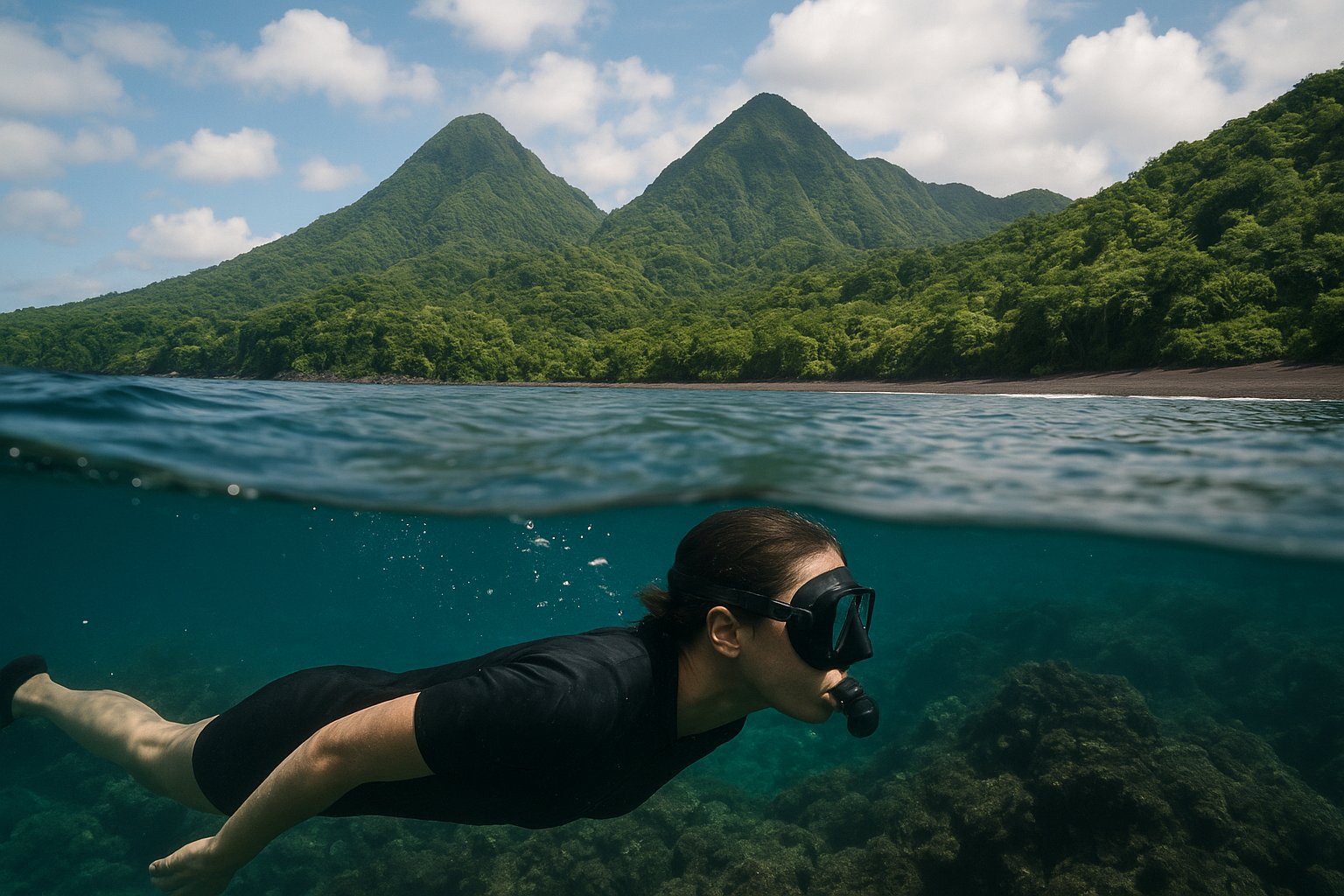
Dominica is the Caribbean with its geology showing. This is the Nature Island — steep, volcanic and green, ringed by black-sand bays and cliffs — and the same volcanic activity that built it surfaces underwater at Champagne Reef, where gas seeps send streams of warm bubbles up through the coral. Add a protected marine reserve at Scotts Head, walk-in bays on the north-west coast and warm water year-round, and you have a reef destination that doesn't look or feel like the usual sandy Caribbean island.
Seasonal guidance, not a forecast — no live tide tables, weather or marine advisories here; check local conditions before you go.
Why Dominica is great for snorkeling
The headline is geological: Champagne Reef sits over volcanic gas seeps that push warm streams of bubbles up through coral, sponges and seagrass, so you drift through fizz rather than just over a reef. It's shallow, it needs no special training, and there are very few places in the Caribbean where you can do it.
The rest of the island rewards the same trip. The south-west corner is protected as the Soufrière–Scotts Head Marine Reserve, with coral-topped pinnacles and a sheltered bay at the mouth of a volcanic crater; the north-west coast has calm bays where the reef starts a short swim from the sand. Dominica is also quieter than its famous neighbours — fewer boats, fewer resorts, no mass snorkel-tour industry — and that shows in the water.
- Volcanic gas seeps you snorkel straight through at Champagne Reef
- A protected marine reserve in the south-west, with shallow reef and pinnacles
- Walk-in bay snorkeling on the calmer north-west coast
- Far less boat traffic than the mainstream Caribbean islands
Best sites to prioritize
Start with Champagne Reef. The bubbles rise in shallow water close enough to shore that many visitors swim or paddle out, and it works just as well on a short boat hop or as a dive-centre guided swim. Bring a mask that seals well — fizzing water takes a little getting used to — and simply float over the reef rather than trying to cover distance.
At Scotts Head, on the reserve's outer edge, coral-topped pinnacles rise from deeper water at the mouth of the bay. Be clear about what you're booking: the pinnacles and the drop-off are dive territory, and the snorkeling is the shallow tops and the sheltered side of the bay, which a local boat can put you on. The setting alone — crater rim above, village alongside — makes it worth the trip.
On the north-west coast, Douglas Bay below Cabrits National Park and Toucari Bay are the easy shore entries: shallow coral, rock and seagrass a short swim from the beach, with calm morning water and, at Toucari, a fishing village to walk back through afterwards.
When to go & conditions
Dominica sits in the eastern Caribbean's hurricane belt. The calmest, clearest snorkeling tends to come in the drier months, roughly December to May, when the sea is settled and the west-coast bays run clear — that's the window most visitors plan around.
The wetter months, roughly June to November, bring heavier rain and the Atlantic storm season with it. Rain means runoff: visibility near river mouths can drop after heavy weather, and exposed coastlines pick up swell, while the sheltered bays on the leeward west coast stay the most usable. Water temperatures are warm through the year, so a rashguard or a thin shorty is all most people need.
Practical tips
Some of the best water sits inside protected or park-designated areas — the Soufrière–Scotts Head Marine Reserve and the Cabrits National Park area — so check the current rules and any user-fee arrangement locally rather than assuming a free walk-in. Reserve rules exist because the reef is worth protecting: no touching, no standing on coral, and keep your fins off the bottom.
The volcanic coast means rocky and black-sand entries in places. Reef booties help, test the entry before you commit your gear, and snorkel away from river mouths for a day or two after heavy rain. Local dive shops and boat guides are the fastest way to learn which bay is clear on the day you're there.
Finally, treat the bubbles with respect: they're hot gas, and they rise through living reef. Float above the vents, don't put your hands into them, and let the reef do the rest.
Planning this trip?
Get the whole journey built end-to-end — flights, stays, boat days, gear and day-by-day timing notes — by the Double Fathom Concierge for a one-time $29. Re-plan any time, chat support through the trip, a destination-specific packing list, curated off-menu operators, and a printable offline PDF itinerary.
Secure checkout by Stripe — pay by card, receipt by email. A one-time, per-trip purchase — nothing recurring, and no rush either way.
Get the occasional best-reef dispatch
Trip-planning tips, seasonal reef picks and new-destination notes. No spam, unsubscribe anytime.
Explore the destination
Dominica's volcanic coast puts warm gas bubbles, a protected marine reserve and calm shore entries within a short swim or boat hop — the rare Caribbean island where the reef is genuinely volcanic rather than sandy.
Dominica destination guide →