Best Snorkeling in Fernando de Noronha
5 min read · Field guide
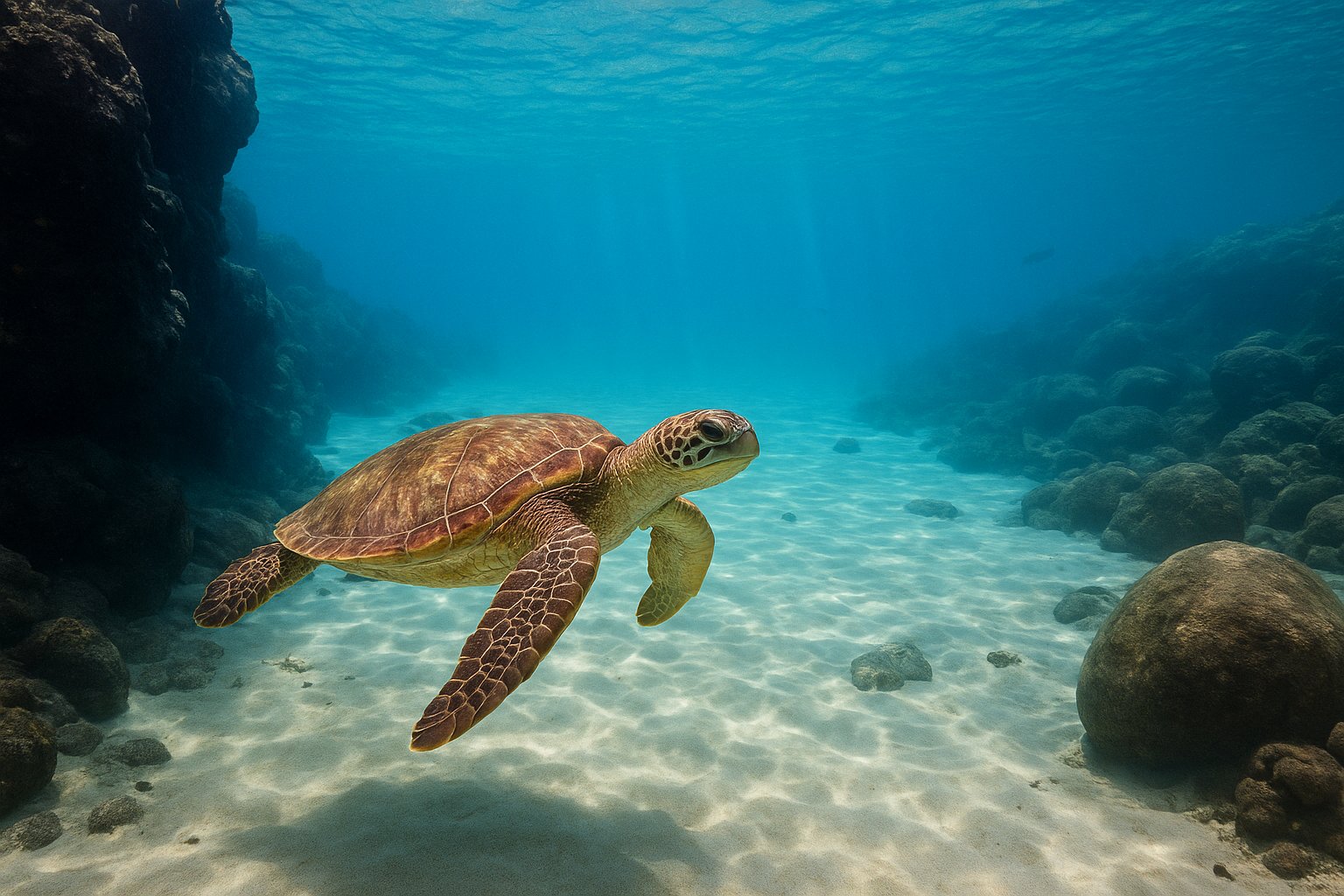
Fernando de Noronha is a volcanic archipelago roughly 350 kilometres off Brazil's north-east coast, protected as a marine national park with a hard cap on how many visitors can be on the island at once and a daily environmental-preservation fee. What you come here for is water clarity, turtles and an island that never feels crowded; what you should not expect is a dense tropical coral reef. This is rocky, volcanic shore with patch reef and seagrass, and it is worth describing honestly.
Seasonal guidance, not a forecast — no live tide tables, weather or marine advisories here; check local conditions before you go.
Why snorkel Fernando de Noronha
For the water. The island sits far enough into the open South Atlantic that runoff and river influence are minimal, and the result is visibility that surprises people who think of Brazil's coast as murky. At the island's best-known bays you can read the bottom from the surface in a way that is rare anywhere in the Atlantic.
And for the emptiness, which is not an accident. Visitor numbers are capped, a daily environmental-preservation fee applies, and the archipelago is a marine national park — the rules are the reason the turtles, rays and reef fish are as approachable as they are. This is one of the few places in our catalog where the conservation regime, not the coral, is the headline.
The honest caveat: this is volcanic and rocky coast rather than a dense tropical coral reef. There is patch reef, there is seagrass, there are boulders and ledges — but if your measure of a great snorkel is coral cover, other destinations do that better. What Fernando de Noronha does exceptionally well is clarity, turtles and space.
- Marine national park with a cap on visitor numbers and a daily preservation fee
- Rocky, volcanic shore with patch reef and seagrass rather than dense coral
- Exceptional open-Atlantic water clarity and a resident turtle population
- Reached by small plane from Natal or Recife — this is a deliberate journey
Best sites to prioritize
Baía do Sancho is the one everyone names, and it earns it: a crescent of sand under sheer cliffs with clear water and rocky inshore structure holding fish and turtles. Be clear about the access, though — you get down to it by a steep stairway and ladder cut into the cliff, and the bay is swell-dependent, so it is not always a swimming day.
Baía dos Porcos, next door, is the postcard view: two rock formations in shallow, glass-clear water with snorkeling over rock and patch reef just off the sand. It is shallow and exposed, at its best on a calm day and surge-driven when the swell is up.
Sueste Bay, on the south-east coast inside the park, is the easy one: shallow and sheltered, with turtles grazing the seagrass and small sharks and rays working the sand — a nursery inside a protected bay and the most forgiving place to spend an hour with a mask on. Atalaia Beach and its natural pools are the most tightly managed site on the island, with tide-fed clarity and fish life right at the surface; access there is limited and has been subject to a permit or accompanied-visit arrangement, so confirm what is required on the day.
And one boundary worth knowing before you arrive: Baía dos Golfinhos, the spinner-dolphin bay beside Sancho, is a viewing point from the clifftop, not a snorkel site. In-water access is not permitted — the bay is a dolphin resting area, and the animals still use it because of that.
When to go & conditions
The island runs on a dry and a wet season. The drier months, broadly August to February, tend to give the calmest seas and the clearest water, while the wetter half of the year from roughly March to July brings more rain and more swell. Water stays warm year-round, so temperature is rarely the planning question — swell and wind are.
Swell is the real variable, and it has a geography to it. The island's bays face different directions, so when one side is running, the water elsewhere is usually workable, and access to the exposed beaches can be closed when the sea is up. That is a judgment made locally on the day, not a schedule you can plan around in advance.
Tides matter a lot on the reef flats, which are shallow enough to be walked at low water and are best snorkeled around higher water. Because visitor numbers are capped and a daily environmental fee applies, the island and the park need booking together with your flights — do not assume you can turn up. Verify current conditions, park rules and access arrangements locally.
Practical tips
Book the island before the flights. The visitor cap is the binding constraint here: the park administration controls how many people are on the archipelago at a time, and the daily environmental-preservation fee is part of the trip rather than a surprise at the gate. Arrange the park, the flights from Natal or Recife and your pousada as one plan, well ahead.
Plan for a small island with thin services. Bring your own mask, snorkel and fins — rental is limited and a badly fitting mask ruins a good water day — plus a rashguard for sun protection, reef-safe sunscreen, a dry bag and strong footwear for the cliff stairways and rocky access. Carry cash for the small number of local businesses, and expect limited shopping.
Respect the park's rules, because they are what you came for. Do not touch, feed or chase wildlife, do not take anything from the water or the shore, and stay out of the dolphin bay. Site access can be limited or rotated to spread the load, so check locally each morning rather than assuming your list is available.
One practical Brazilian note: 190 reaches the police, 192 is the ambulance service and 193 the fire service, and the island is far enough offshore that anything serious becomes an evacuation to the mainland. Carry travel insurance that covers medical evacuation, and confirm the on-island medical arrangements locally before you go. The travel admin panel on the destination page carries the verified entry, health and hospital information.
Planning this trip?
Get the whole journey built end-to-end — flights, stays, boat days, gear and day-by-day timing notes — by the Double Fathom Concierge for a one-time $29. Re-plan any time, chat support through the trip, a destination-specific packing list, curated off-menu operators, and a printable offline PDF itinerary.
Secure checkout by Stripe — pay by card, receipt by email. A one-time, per-trip purchase — nothing recurring, and no rush either way.
Get the occasional best-reef dispatch
Trip-planning tips, seasonal reef picks and new-destination notes. No spam, unsubscribe anytime.
Explore the destination
A volcanic archipelago off Brazil's north-east coast, protected as a marine national park with a hard cap on visitors and a daily environmental fee. Go for water clarity, turtles and an island that never feels full — honestly, this is rocky volcanic shore rather than a dense tropical coral reef.
Fernando de Noronha destination guide →