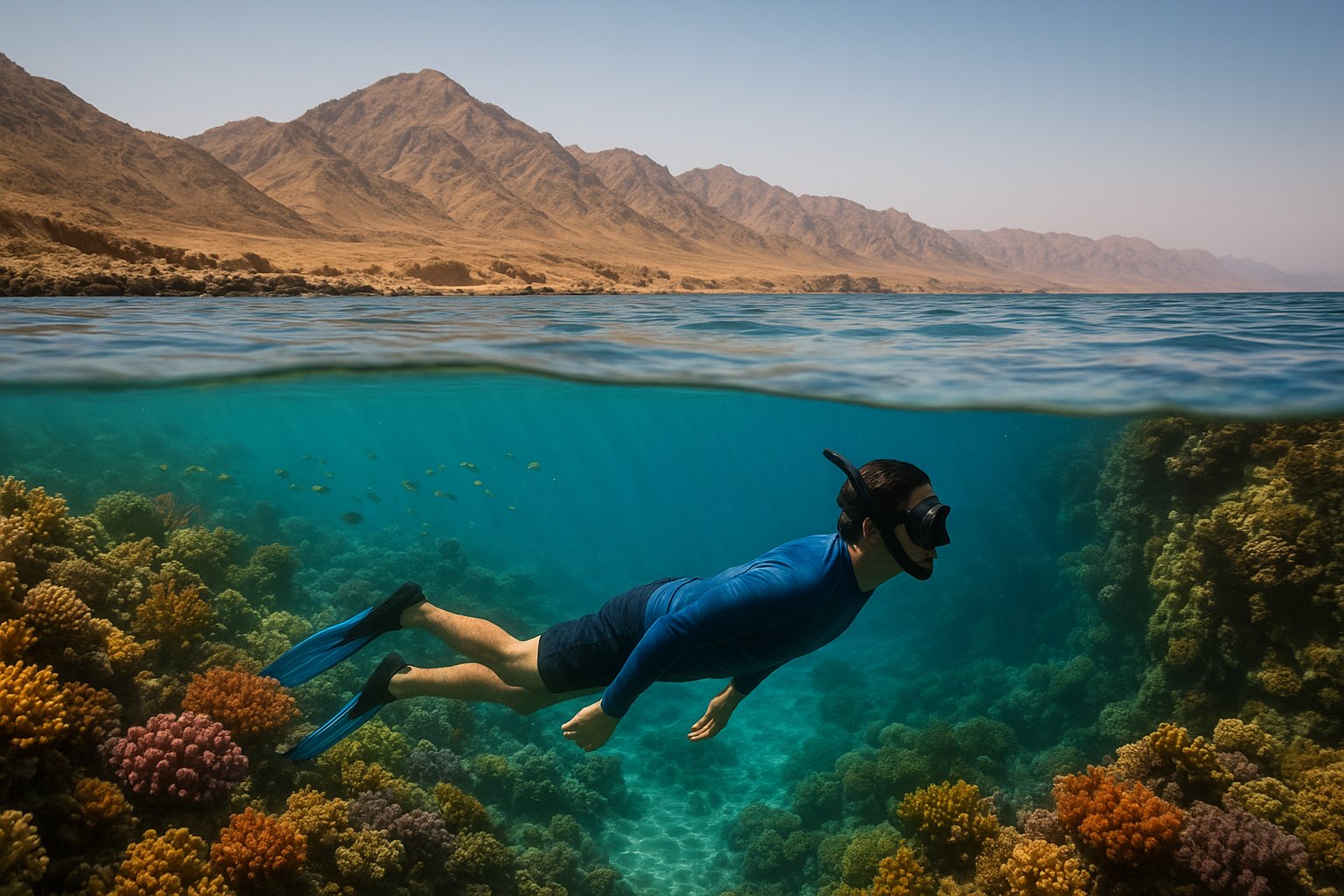
Best Snorkeling in Red Sea Egypt
6 min read · Field guide
Egypt's Red Sea coast is sold on its diving, and the diving deserves it. But strip out the walls, the offshore pinnacles and the wrecks and there is still a genuine snorkeling coastline here: shallow coral gardens on the Hurghada to Marsa Alam stretch, seagrass bays where green turtles and dugongs feed, and shallow reef shelves inside the national park at the tip of Sinai. The water is warm and the desert behind it means almost no runoff, so visibility can be extraordinary. The trick is knowing which sites belong to which sport — because the difference between a great Red Sea snorkel day and a wasted one is usually just that.
Seasonal guidance, not a forecast — no live tide tables, weather or marine advisories here; check local conditions before you go.
Why snorkel Egypt's Red Sea
Because the reef is close to the beach and the coast is easy to travel. Unlike the liveaboard-only reef provinces elsewhere in the catalog, a large share of Egyptian Red Sea snorkeling is either walk-in or a short day-boat ride from a resort town: Hurghada and its offshore islands, Marsa Alam's bays, Sharm el-Sheikh's park water at the tip of Sinai. You do not need an expedition to see healthy coral here — you need a mask, a boat slot and the right site.
The second reason is the water itself. The Red Sea is a warm, enclosed arm of the Indian Ocean with a narrow connection to the Gulf of Aden, and its marine life belongs to the Indo-Pacific realm — the same broad reef family as the Coral Triangle, thousands of kilometres away. It has no major river system feeding into it, so there is very little sediment in the water, and visibility is often measured in tens of metres. Warm, clear, coral-rich water a short flight from Europe is a rare combination.
- Shallow coral gardens in snorkel depth on the Hurghada island circuit
- Seagrass bays at Marsa Alam where green turtles and dugongs feed
- Shallow reef shelves inside Ras Mohammed National Park on Sinai
- Warm water and desert-clear visibility on most days
- Reliable resort-town logistics rather than expedition planning
Best sites to prioritize
Start with Marsa Alam if the seagrass bays are what you want. Abu Dabbab Bay is the classic: a shallow, sandy-bottomed bay over seagrass, in a few metres of water, where green sea turtles graze and dugongs — the animal the bay is known for — come in to feed. Everything happens in snorkel range. Be honest with yourself about the odds, though: these are wild animals on nobody's schedule, sightings are never guaranteed, and the seagrass is their food, so you float above it and never touch or uproot it. Nearby Sha'ab Samadai, the 'Dolphin House', is a horseshoe reef with a shallow lagoon where spinner dolphins rest by day; the reef is a proper coral site in snorkel depth, the dolphins are a possibility rather than a plan, and access has been managed with time slots and zoning at various points to protect the population.
Then Ras Mohammed National Park for the Sinai side. It sits where the Gulf of Suez and the Gulf of Aqaba meet the open Red Sea, and it is the most famous name in Egyptian water — but the fame belongs to the walls. Shark Reef and Yolanda Reef are drop-offs in current, dived rather than snorkeled, and this catalog does not sell them as snorkel sites. What a snorkeler gets is the park's shallow reef shelf and lagoon-edge coral, with the same clarity and life in a few metres. Go with an operator who knows which of the park's sites actually suit snorkelers that day.
On the northern coast, the Giftun Islands off Hurghada are the easy day: low desert islands fringed with shallow coral gardens and sandy shallows, worked by day boats from the resort strip. It is the simplest Red Sea snorkel to arrange and genuinely good in a few metres — just respect how busy that water is. Dozens of boats work the same moorings, so stay close to your boat, use a marker float, and choose an operator who moors rather than drops anchor on coral.
Finally, keep the distinction honest at the top end. Elphinstone Reef, offshore from Marsa Alam, is a legendary Red Sea site — a narrow reef with sheer walls dropping away on both sides — and it is an open-water wall dive with current. It is not a snorkel site, and we list it so the boundary is explicit rather than blurred by a brochure. The same goes for the deeper coral heads and pinnacles anywhere along this coast: if a site's reputation rests on depth, current or a wreck, it belongs to divers.
When to go & conditions
The Red Sea is a year-round destination, which is unusual in this catalog: water temperatures stay warm enough to snorkel comfortably in every month, and there is no monsoon that closes the coast. What changes is air temperature and wind rather than whether you can get in. Broadly, the spring and autumn months give the most comfortable balance of warm water and settled air; midsummer on the desert coast is genuinely hot above the waterline, and winter can be cool and breezy on the surface even though the water stays warm.
Wind is the variable that decides most days. A strong northerly can chop up the exposed sites and shut a boat day down while leaving the sheltered bays perfectly swimmable, which is one reason the bays and the lee sides of the islands are worth building around rather than a fixed list of offshore sites. Mornings are usually the calmest window.
Visibility varies with plankton and with site, not with a season you can plan around, and it can be outstanding anywhere on this coast. Because so much of the good snorkeling here is in a few metres of water, light and calm matter more than clarity in the abstract. Verify the day's wind, the sea state and current conditions locally, and be aware that many sites — the park among them — are managed reserves with their own rules.
Practical tips
Travel by coast, not by country. Hurghada, Marsa Alam and Sharm el-Sheikh are hours apart, connected by road and short flights, and the snorkeling character is different in each: resort-island reefs in the north, seagrass and dugongs in the south, park water on Sinai. Pick one or two bases rather than trying to cover the coast, and note that Sharm el-Sheikh has a separate short-stay entry arrangement for resort visitors that does not apply if you travel on elsewhere — check the entry rules for your own route.
Take the wildlife rules seriously, because they are the difference between the animals staying and leaving. Never touch, ride, chase or block a turtle or a dugong, give them the right of way, and keep well clear of any animal that is feeding or resting — Abu Dabbab's seagrass and Sha'ab Samadai's lagoon are both places where human pressure has been managed for a reason. Never stand on coral or seagrass, and use reef-safe sunscreen.
Pack for a desert coast: strong sun, dry air and a cool breeze on the boat even when the water is warm. Bring your own well-fitted mask and fins — rental kit in the resort towns varies in quality — plus a rashguard or thin shorty for longer sessions, booties if you plan rocky entries, and a dry bag for the boat.
On safety, use a marker float in the busy boat channels around Hurghada and the Giftuns, check the current before you swim anywhere near a drop-off, and be aware that the nearest recompression chamber and hospital may not be where you are staying — the travel admin panel on the destination page carries the verified details. If you are a diver, confirm your operator's evacuation plan before you board.
Planning this trip?
Get the whole journey built end-to-end — flights, stays, boat days, gear and day-by-day timing notes — by the Double Fathom Concierge for a one-time $29. Re-plan any time, chat support through the trip, a destination-specific packing list, curated off-menu operators, and a printable offline PDF itinerary.
Secure checkout by Stripe — pay by card, receipt by email. A one-time, per-trip purchase — nothing recurring, and no rush either way.
Get the occasional best-reef dispatch
Trip-planning tips, seasonal reef picks and new-destination notes. No spam, unsubscribe anytime.
Explore the destination
Egypt's Red Sea is easy to undervalue as a snorkel destination because most of its fame belongs to divers: the walls at Ras Mohammed, the offshore pinnacles, the wrecks. But the coast has a real snorkeling backbone — shore-entry and shallow boat reefs on the Hurghada to Marsa Alam stretch, seagrass bays at Marsa Alam where dugongs and green turtles graze, and shallow coral shelves inside Ras Mohammed National Park at the tip of Sinai. The Red Sea is a warm, enclosed arm of the Indian Ocean and belongs to the Indo-Pacific marine realm — the same reef family as the Coral Triangle, a long way from it — and the desert behind it means very little runoff, which is part of why visibility is so often outstanding. Keep one distinction honest throughout: the classic drop-offs and pinnacles are dives, and the snorkeling is a different set of sites.
Red Sea Egypt destination guide →