Aitutaki & Rarotonga, Cook Islands
Indo-Pacific

Cook Islands

Fifteen South Pacific islands in free association with New Zealand — and two of them carry the snorkeling, one of them a lagoon of exceptional beauty.

46

Double Fathom ranking

The lagoon classic

Best for

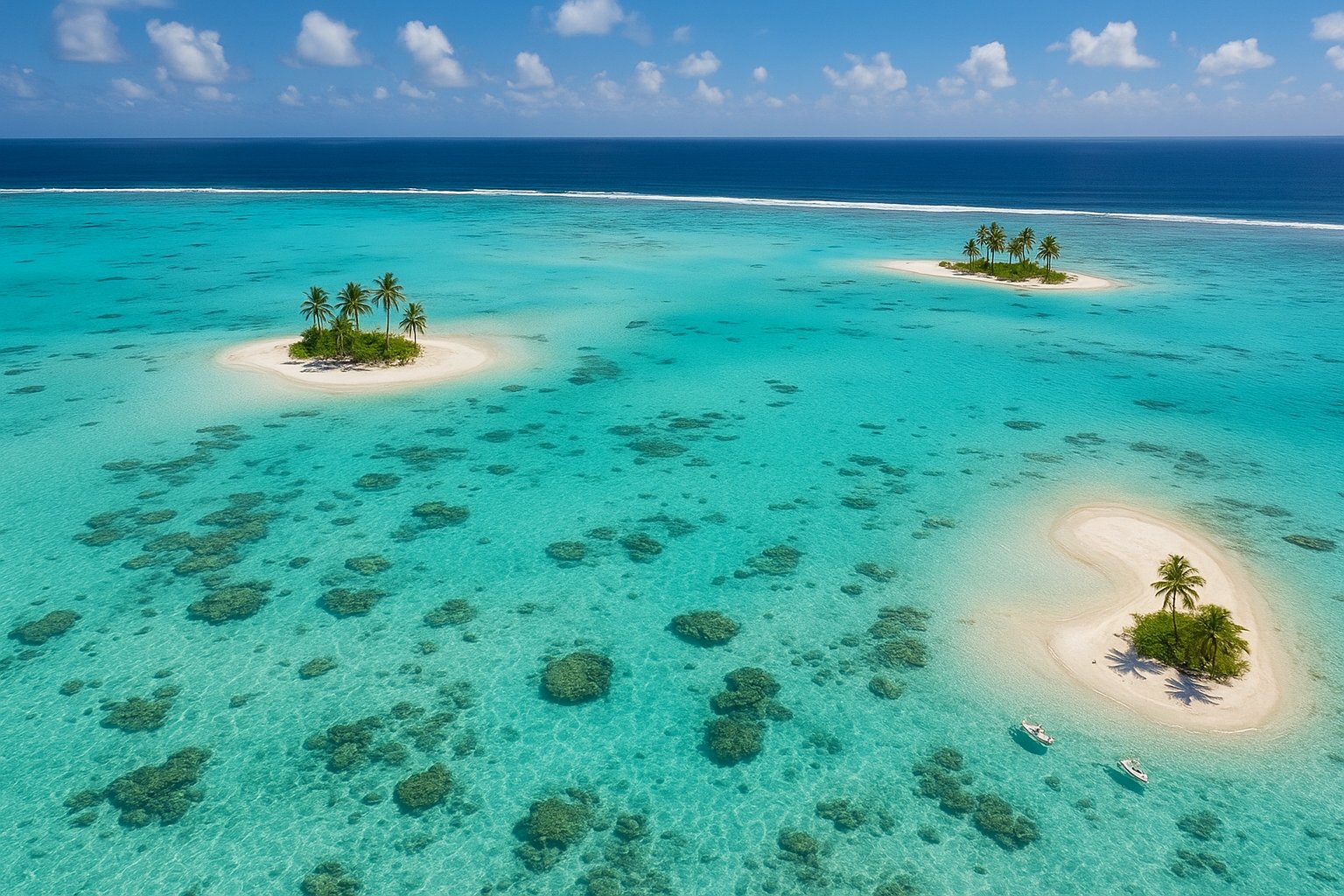
A South Pacific island country of fifteen islands in free association with New Zealand, and two of them carry the snorkeling. Rarotonga, the main island, is ringed by a fringing reef with a lagoon between the shore and the break — easy, warm, walk-in water. Aitutaki, a short flight north, holds an enormous turquoise lagoon of coral heads, sand and uninhabited motu that is the picture most people have in mind when they say South Pacific. Expect coral, giant clams, rays and turtles in calm, clear water, plus a reef pass or two for stronger swimmers. It is a small country with real limits on infrastructure and a long way from anywhere, which is a large part of the appeal.

Lagoon water · True South Pacific

Key sites to explore

The distinctive underwater sights worth planning around. Descriptions are curated planning info — always verify local access, rules and conditions before you set out.

01

Aitutaki lagoon

Lagoon

📍 Aitutaki, southern Cook Islands

The classic: a vast, shallow, near-enclosed lagoon ringed by low motu on the outer reef, with coral heads scattered through brilliant sand shallows. Boat stops are usually over coral with reef fish, giant clams and the occasional ray, and the water is warm and calm enough to stay in for hours.

It is a very big lagoon with genuinely shallow coral in places and real boat traffic on the popular routes: go with a licensed local operator, do not stand on coral, and ask before taking clams or shells — the lagoon is the island's food and its livelihood. Access and any fees are set locally; verify current arrangements.

02

One Foot Island (Tapuaetai) and the outer motu

Reef

📍 Aitutaki's lagoon, south-east rim

The best-known island in the lagoon: a small, flat motu on the reef rim with clear sand shallows and shallow coral around it, and a short walk to the outer edge where the lagoon meets the reef. Day boats anchor off it, and the coral around these motu is where much of the lagoon's snorkeling actually happens.

Popular and tidal: at low water some flats are barely awash, so watch the tide and your fins. These are inhabited and customary islands rather than resorts — respect local rules, and take everything back with you.

03

Muri Lagoon and its motu, Rarotonga

Lagoon

📍 South-east coast of Rarotonga

Rarotonga's postcard lagoon: a wide, shallow, protected stretch of sand, coral and four small motu inside the reef, easy to walk into from the beach and gentle enough for children in the right conditions, with reef fish, small rays and the occasional turtle.

Honest caveat: the coral close to shore and around the busiest parts of this lagoon has been heavily affected, and its best water is further out towards the motu and the reef edge. Ask locally where it is healthiest right now, and mind the boat channels.

04

Rarotonga's reef passes

Reef

📍 The breaks in Rarotonga's fringing reef

The few openings in the reef around Rarotonga — Rutaki and Aroa among them — are the deepest, clearest and most marine-rich water on the island, where the ocean flows in and out of the lagoon. Turtles, eagle rays and fish concentrate around them, and snorkeling the edge of a pass is a very different experience from the lagoon.

Real safety note: a pass is a current, and an outgoing tide pushes water out through it. Only snorkel a pass with a local guide, on the right tide, staying where the operator puts you — this is not self-guided water. Ask about the day's conditions before you commit.

05

Aroa Beach and Rarotonga's west coast

Shore reef

📍 Aroa and Black Rock, west coast of Rarotonga

The island's easiest saltwater swimming and snorkeling side: sheltered, walk-in shallows over coral and sand on the west coast, with the island's best from-the-beach snorkeling when the wind allows and a community protection arrangement covering part of the coast.

Part of this coast sits under a traditional ra'ui — a community no-take arrangement — and the rules that come with it are local and enforced by the community rather than by a park office. Check current rules before you take or touch anything, and watch the water level at low tide.
Snorkeling in Cook Islands: quick answers

Where do you snorkel in the Cook Islands?
Two islands carry it. Rarotonga is ringed by a fringing reef with a lagoon between the shore and the break — easy, warm, walk-in water — plus a few reef passes for stronger swimmers. Aitutaki, a short flight north, holds an enormous turquoise lagoon of coral heads, sand and uninhabited motu, and that is the picture most people have in mind when they say South Pacific.
Can you snorkel Rarotonga's reef passes?
Treat a pass as a current rather than a site: an outgoing tide pushes water out through it, so only snorkel one with a local guide, on the right tide, staying where the operator puts you. Rutaki and Aroa are the deepest, clearest and most marine-rich water on the island, where turtles, eagle rays and fish concentrate — and they are not self-guided water.

Book tours & stays

Real boat-day tours, transfers and stays linked on verified booking partners — pages with indicative “from” prices where one is known. Availability and live pricing are shown on the partner site at booking time.

Affiliate links — we may earn a commission at no extra cost to you. Prices shown are indicative “from” amounts, not live or guaranteed.

Getting there: flights to Rarotonga (RAR), Cook Islands

We don't print airfares — they move daily, so any “from” figure would be stale before you booked. This opens a live Aviasales search for Rarotonga (RAR), Cook Islands, pre-filled from Auckland (AKL) with example dates in November 2026. Set your own departure city and dates on Aviasales; the fares, routing and currency are live there, not here.

Rarotonga (RAR) is the Cook Islands' international gateway and the island with the fringing-reef lagoon. Aitutaki (AIT) is a short domestic hop north for the Aitutaki lagoon.

Affiliate link — we may earn a commission at no extra cost to you. No flight prices are shown or guaranteed: fares change constantly, so the search opens live instead. The example date and departure city are just a starting point.

Local food gems

Eat like a local — three off-the-radar spots to round out a day in the water. Spots above the tourist strip, found by asking where the boat crews and neighbours actually eat.

01

Ika mata

Rarotonga and Aitutaki

The Cook Islands' own dish and the one to order first: raw fish — usually tuna or mahi-mahi — cured briefly in lime, then dressed in coconut cream with onion, tomato, cucumber and chilli. It is cooling, sharp and exactly what you want after a morning in the lagoon.

Tip: Every cook makes it differently, so order it more than once; the version with a lot of lime is the one that tastes best in the heat. Pair it with taro or cassava chips rather than bread.

02

An umu feast on a Sunday

Rarotonga

The umu is an earth oven of hot stones, and a proper island feast from it means pork, chicken and fish with taro, kumara, breadfruit and palusami. Several Rarotongan venues run a Sunday lunch or an island night with drumming and dance, and it is the island's food and its hospitality at once.

Tip: Sunday is widely observed in the Cook Islands — many shops and restaurants shut, and it is worth planning around and respecting. Book a feast in advance rather than turning up.

03

A lagoon lunch on a motu in Aitutaki

Aitutaki lagoon

Most full-day lagoon boat trips include a barbecue lunch on one of the motu: grilled fish, chicken, salad made with what the boat brought, and fruit — eaten on a sandbank with the lagoon all around you. It is the single most memorable meal of a Cook Islands trip.

Tip: Confirm whether lunch is included when you book the trip, take your own water, and carry everything back off the island — these motu are small, customary places with no waste collection.

Planning Cook Islands?

Get the whole journey built end-to-end — flights, stays, boat days, gear and day-by-day timing notes — by the Double Fathom Concierge for a one-time $29. Re-plan any time, chat support through the trip, a destination-specific packing list, curated off-menu operators, and a printable offline PDF itinerary.

$29 / trip · one-timeBuy Concierge — $29

Secure checkout by Stripe — pay by card, receipt by email. A one-time, per-trip purchase — nothing recurring, and no rush either way.

Ready to plan Cook Islands properly?

The free Mission Briefing is one fixed Raja Ampat sample — not a custom build. To have this destination planned properly, the $29 Concierge tier plans around your dates and re-plans as often as you like.