Galápagos Islands, Ecuador
Indo-Pacific

Galápagos

Sea lions, penguins and cool-water reef inside a strictly regulated national park.

25

Double Fathom ranking

The regulated one

Best for

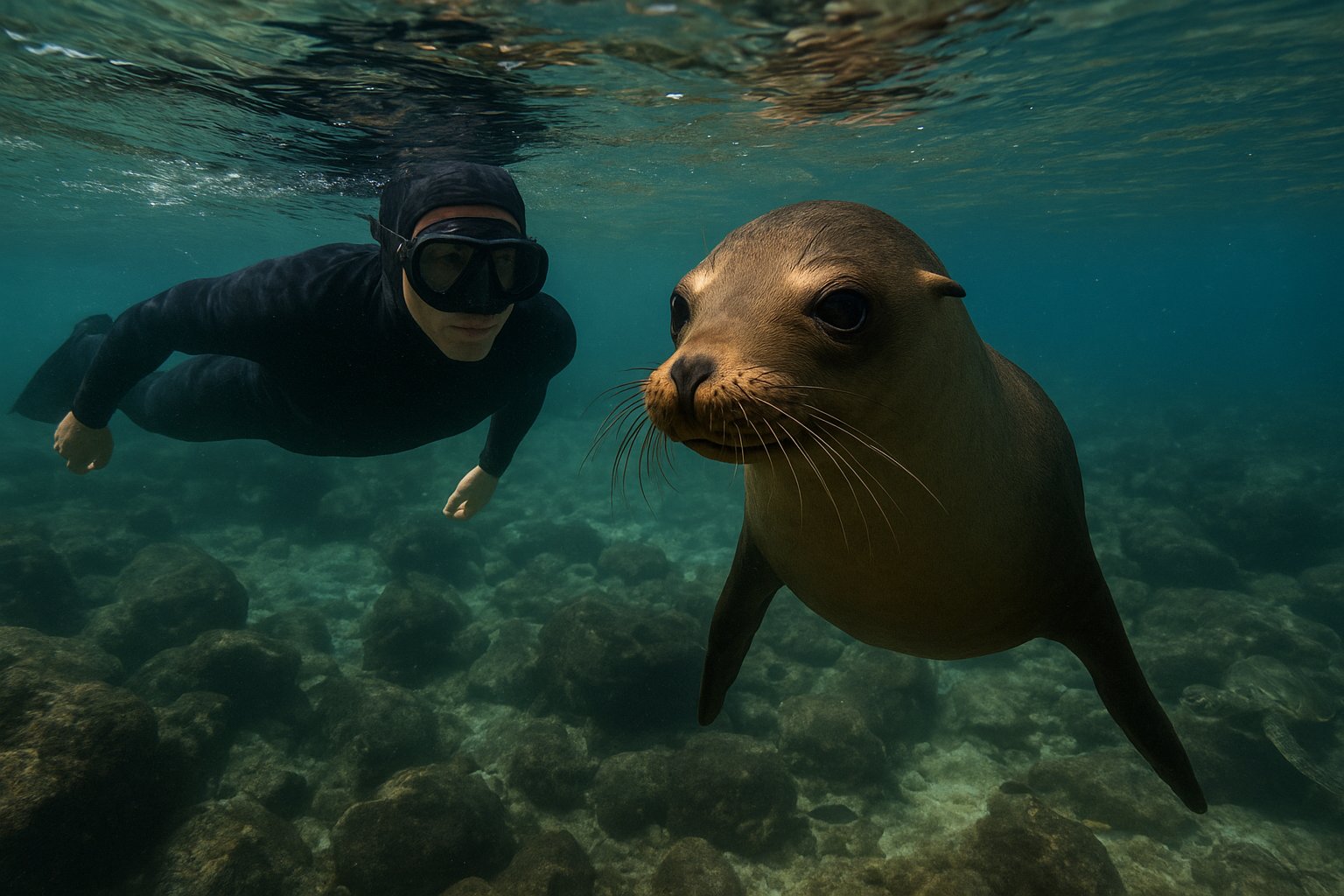
The Galápagos is not a carefree beach trip and this catalog will not describe it as one: it is a tightly regulated national park, where a park entry fee is collected on arrival, many sites can only be visited with a licensed naturalist guide, and you reach the islands by flying from mainland Ecuador to one of the archipelago's two airports. It is also one of the few places on earth where you can snorkel beside sea lions and Galápagos penguins. The water runs cool on the Humboldt current, so exposure protection is normal rather than optional.

Volcanic shore · Marine park

Key sites to explore

The distinctive underwater sights worth planning around. Descriptions are curated planning info — always verify local access, rules and conditions before you set out.

01

Concha de Perla

Lagoon

📍 Just south of Puerto Villamil, Isabela

A shallow, sheltered inlet behind a mangrove fringe, reached by a short boardwalk from Puerto Villamil. The water is calm, the entry is from the shore, and sea lions use the beach while marine iguanas sit on the rocks and reef fish and small rays work the sand and rock inside the inlet. It is the archipelago's most accessible snorkel and the obvious warm-up before a boat day.

This is national-park water even at a walk-in site: stay off the mangroves and the rocky edges, give sea lions — especially the big bulls — respectful room, and never touch or chase the wildlife.

02

La Lobería, San Cristóbal

Shore reef

📍 South-west of Puerto Baquerizo Moreno, San Cristóbal

A rocky bay a short walk or taxi ride from the islands' capital, named for the sea lion colony that shares it. Entry is over rock and pebble into shallow water over boulders, coral and rock, where sea lions often swim with snorkelers and turtles and reef fish work the margins. The beach above it is a sea lion haul-out, which is most of the point.

The entry is rocky and the bay takes swell, so pick a calm day and wear booties — verify conditions locally rather than assuming a flat-water swim, and keep well clear of the haul-out and the bulls.

03

Tortuga Bay & Playa Mansa

Shore reef

📍 West of Puerto Ayora, Santa Cruz

A long white-sand beach reached on foot along a marked trail from Puerto Ayora, with a calm, mangrove-lined second bay — Playa Mansa — around the point. The snorkeling is modest and honest about it: reef fish, small rays and the occasional turtle over sand, rock and mangrove edge. It is the most straightforward place to get in the water near Santa Cruz without a boat.

The ocean-facing beach has shorebreak and is not a snorkel entry — swim in the calm side, stay inside whatever the park marks as the swimming area, and check the current trail and access rules locally, because access here is managed.

04

Los Túneles

Reef

📍 Off the south coast of Isabela, west of Puerto Villamil

A run of collapsed lava tunnels, arches and shallow reef a boat ride from Puerto Villamil, with calm channels and pools between the rock where turtles, rays, seahorses and reef fish sit out of the current. It is the classic Isabela boat-and-snorkel day, and the sheltered inner channels are genuinely rewarding water rather than a token stop.

Boat access only, with a licensed operator: the outer side of the lava run takes surge and current while the inner channels stay calm, so which side you snorkel is the skipper's call on the day. Treat it as a guided day rather than a fixed, always-the-same site.

05

Kicker Rock (León Dormido)

Megafauna point

📍 Off San Cristóbal, reached by boat from Puerto Baquerizo Moreno

A sheer volcanic tuff cone standing out of open water, split into two towers with a channel between them. The channel is the famous swim — sea lions, turtles and schooling fish, with the chance of hammerheads and other sharks in the deeper water around it. It is one of the archipelago's landmark sites and the one most snorkelers ask about.

Be clear about what this is: principally a dive site, in deep, open, exposed water. Snorkeling the channel happens on boat tours when conditions allow, and current, swell and surge can rule it out entirely — this is experienced-swimmer water, not a beginner site, and the operator decides on the day.
Snorkeling in Galápagos: quick answers

Do you need a guide to snorkel the Galápagos?
For most visitor sites, yes — much of the archipelago can only be visited with a licensed naturalist guide, and a park entry fee is collected on arrival, with you flying in from mainland Ecuador. Some inlets are reached on foot without a boat, but the park rules and the guided-site system are part of the trip; verify the current requirements and fees with an official source or your operator before you travel.
Is the water in the Galápagos warm?
No — it runs cool on the Humboldt current, so exposure protection is normal rather than optional. The warmer window is broadly December to May, and the cooler, drier season roughly June to November brings noticeably colder water and richer upwelling; plan for a wetsuit rather than a swimsuit, whatever the month.

Local food gems

Eat like a local — three off-the-radar spots to round out a day in the water. Spots above the tourist strip, found by asking where the boat crews and neighbours actually eat.

01

The fish market on Avenida Charles Darwin

Puerto Ayora, Santa Cruz

Puerto Ayora's fish market is where the day's catch is landed and cut up in the open, with pelicans and sea lions waiting on the seawall for the scraps — part market, part wildlife spectacle. The ceviche and grilled fish served around it is about as fresh as food gets.

Tip: Go in the morning when the boats come in: that is when the market is actually working and when the birds and sea lions are on the wall.

02

A breakfast counter doing encebollado

Puerto Baquerizo Moreno, San Cristóbal

Encebollado — a coastal Ecuadorian soup of fish, onion, tomato and coriander, eaten with plantain chips and lime — is the honest island breakfast, and it shows up on small kitchen menus rather than restaurant lists.

Tip: It is a breakfast dish: the kitchens that make it sell out by mid-morning.

03

A Puerto Villamil kitchen for seco and rice

Puerto Villamil, Isabela

Seco — a slow-braised stew of chicken or goat with a sauce built on local fruit, served with rice, plantain and salad — is island home cooking rather than restaurant food, and on Isabela it is what the small kitchens actually cook.

Tip: The pot is the menu: if the day's seco is finished, it is finished, so eat early rather than late.

Planning Galápagos?

Get the whole journey built end-to-end — flights, stays, boat days, gear and day-by-day timing notes — by the Double Fathom Concierge for a one-time $29. Re-plan any time, chat support through the trip, a destination-specific packing list, curated off-menu operators, and a printable offline PDF itinerary.

$29 / trip · one-timeBuy Concierge — $29

Secure checkout by Stripe — pay by card, receipt by email. A one-time, per-trip purchase — nothing recurring, and no rush either way.

Ready to plan Galápagos properly?

The free Mission Briefing is one fixed Raja Ampat sample — not a custom build. To have this destination planned properly, the $29 Concierge tier plans around your dates and re-plans as often as you like.