Best Snorkeling in the Galápagos
6 min read · Field guide
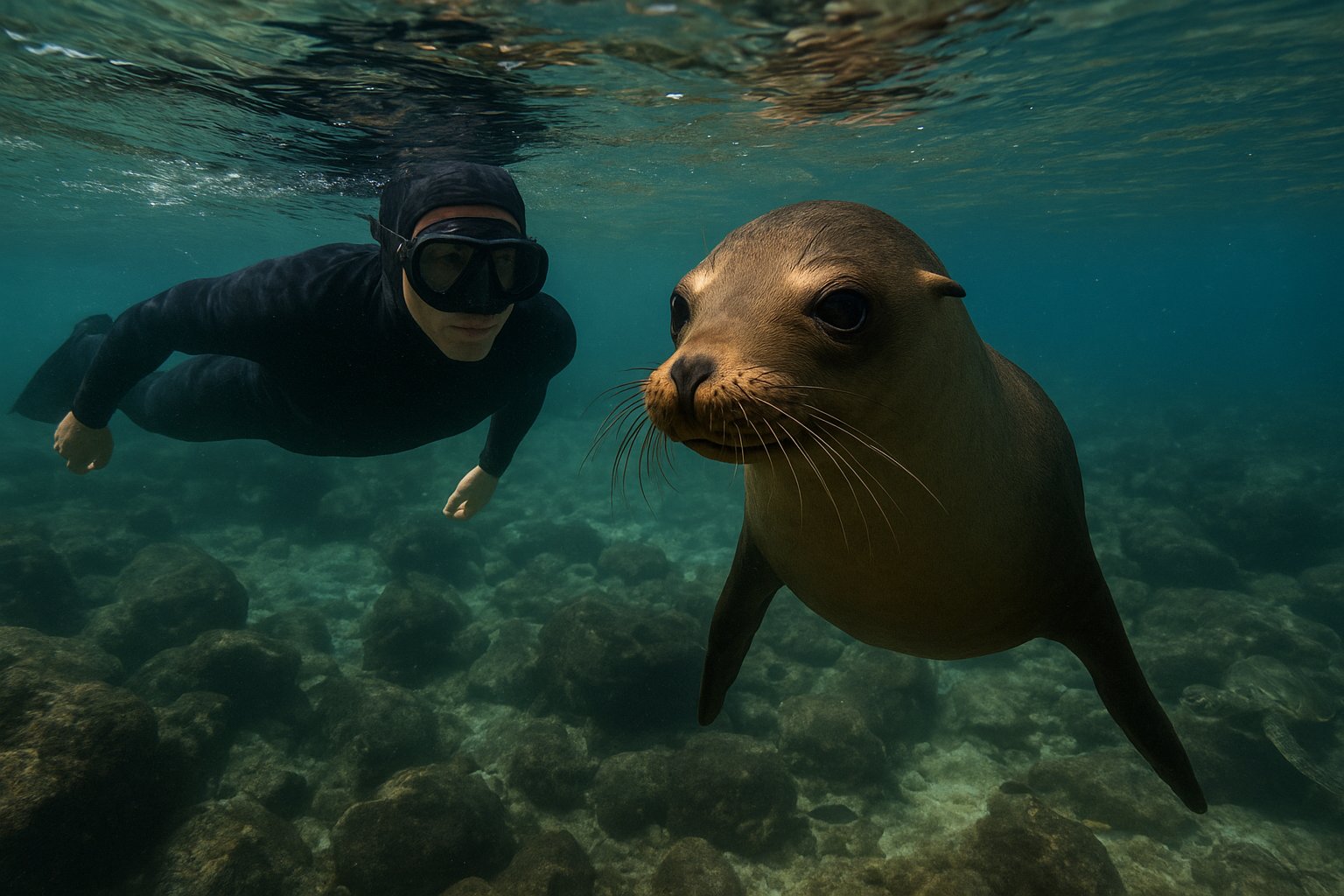
The Galápagos is one of the great wildlife destinations on earth, and snorkeling is one of the best ways to meet it: sea lions that swim with you rather than away from you, marine iguanas grazing underwater, penguins in the shallows, and turtles almost everywhere. It is also the most regulated trip in this catalog. You fly in from mainland Ecuador, a park entry fee is collected on arrival, most visitor sites can only be visited with a licensed naturalist guide, and the water runs cool on the Humboldt current. Plan it as a national park visit that happens to include superb snorkeling — because that is what it is.
Seasonal guidance, not a forecast — no live tide tables, weather or marine advisories here; check local conditions before you go.
Why the Galápagos is great for snorkeling
What makes the Galápagos different is not the coral, it is the company. Because the animals here evolved without land predators and have been protected for generations, encounters are unusually close and unusually calm: sea lions chase each other around swimmers in shallow bays, marine iguanas swim past while grazing algae off the rocks, and flightless cormorants and penguins are seen in the water in the west of the archipelago.
The setting is volcanic rather than reef-built. Instead of coral gardens you get boulder fields, lava rock, sandy channels and mangrove-fringed inlets, plus the deep, current-swept water that surrounds the whole archipelago. That mix is why the water here feels wilder than a resort lagoon — and why the honest expectation is cooler, richer, more exposed water rather than the bath-warm Caribbean.
- Sea lions, marine iguanas, turtles and penguins in the water with you
- Shore-entry inlets as well as boat-only sites, so not every day needs a boat
- Volcanic rock, sand and mangrove instead of coral reef
- Cool water on the Humboldt current — exposure protection is normal, not optional
Best sites to prioritize
Start with Concha de Perla at Isabela's Puerto Villamil: a shallow, sheltered inlet behind a mangrove fringe, reached by a short boardwalk, with sea lions on the beach, marine iguanas on the rocks and reef fish and small rays inside. It is the easiest snorkel in the archipelago and the right place to bed in your gear. On San Cristóbal, La Lobería is the same idea over rockier ground — a rocky bay a short walk from the capital where the sea lion colony is the main attraction and the entry is over boulders rather than sand.
Near Santa Cruz, Tortuga Bay is reached on foot along a marked trail from Puerto Ayora, with a calm, mangrove-lined second bay around the point. Be honest about the scale of it: the snorkeling is modest — fish, small rays, the occasional turtle — and the ocean-facing beach has shorebreak that rules it out as an entry. It is convenience and setting, not a coral destination.
For a boat day, Los Túneles off Isabela's south coast is the one most visitors rate highest: a run of collapsed lava tunnels, arches and shallow reef with calm channels and pools between the rock where turtles, rays and seahorses sit out of the current. The sheltered inner channels are the snorkeling; which side you get depends on the swell and the skipper's call.
And then there is Kicker Rock, off San Cristóbal — the site everyone asks about, and the one that most needs an honest label. It is a sheer volcanic cone split into two towers in deep, open, exposed water. It is principally a dive site. Snorkeling the channel happens on boat tours when conditions allow, with sea lions, turtles and schooling fish in the shallow parts and the chance of hammerheads in the deeper water around it — but current and swell can rule the swim out entirely, and the operator decides on the day.
When to go & conditions
The archipelago sits on the equator and its seasons are about water and current, not air temperature. The warm season, roughly December to May, brings warmer, calmer water and is the window most snorkelers aim for. The cooler, drier season, roughly June to November, is driven by the Humboldt current: the water is noticeably colder, the upwelling is richer in life, and a wetsuit becomes the difference between a comfortable hour in the water and a short one.
Water temperature is the thing to plan around rather than the calendar — this is not the tropics of the Caribbean, and the honest expectation is cool water in the cool season with exposure protection throughout. Visibility varies with the plankton the current brings: richer water feeds the animals but can cut clarity, so the clearest days and the most life are not always the same days.
Because almost everything here happens by boat and under park rules, weather and permits shape the itinerary more than a snorkeler's preference does. Build slack into the plan, ask your operator what is realistic for your dates, and verify current conditions and site access locally rather than committing to a fixed list a year ahead.
Practical tips
Plan for the park, not around it. You reach the islands by flying from mainland Ecuador — Quito or Guayaquil — and on arrival the national park's entry fee and visitor controls apply; a transit-control arrangement also governs movement between the mainland and the archipelago. Amounts and procedures change, so verify the current park rules, fees and paperwork with an official source or your operator before you travel rather than relying on a figure from a blog.
Most visitor sites can only be visited with a licensed naturalist guide, and the rules are enforced: stay on marked paths and within marked swimming areas, do not land on sites that are closed, and never touch, feed, chase or block the path of any animal — sea lions, iguanas and turtles included. Nothing may be taken from the islands: no shells, rock, sand or plant material, and biosecurity checks apply on arrival and departure.
Pack for cool water and hard ground: a wetsuit (or at least a shorty) for every season, booties for rocky and boulder entries at places like La Lobería, a rashguard for the sun, and a dry bag for boat days. Bring your own well-fitted mask if you can — in a place where the wildlife comes to you, a leaking mask costs you the whole encounter.
Planning this trip?
Get the whole journey built end-to-end — flights, stays, boat days, gear and day-by-day timing notes — by the Double Fathom Concierge for a one-time $29. Re-plan any time, chat support through the trip, a destination-specific packing list, curated off-menu operators, and a printable offline PDF itinerary.
Secure checkout by Stripe — pay by card, receipt by email. A one-time, per-trip purchase — nothing recurring, and no rush either way.
Get the occasional best-reef dispatch
Trip-planning tips, seasonal reef picks and new-destination notes. No spam, unsubscribe anytime.
Explore the destination
The Galápagos is not a carefree beach trip and this catalog will not describe it as one: it is a tightly regulated national park, where a park entry fee is collected on arrival, many sites can only be visited with a licensed naturalist guide, and you reach the islands by flying from mainland Ecuador to one of the archipelago's two airports. It is also one of the few places on earth where you can snorkel beside sea lions and Galápagos penguins. The water runs cool on the Humboldt current, so exposure protection is normal rather than optional.
Galápagos destination guide →