The distinctive underwater sights worth planning around. Descriptions are curated planning info — always verify local access, rules and conditions before you set out.
01
The Blue Hole, Dwejra
Blue hole📍 Dwejra, west coast of Gozo
A collapsed limestone sinkhole a few steps from the shore, opening into a vertical shaft that leads out through an arch to the open water beyond. Sheer walls, boulders and famously clear blue water — the island's signature swim.
Dwejra faces the open sea and swell: check the marine forecast before you commit, and treat it as a boat-free but exposed site. There is no coral here — the appeal is the rock, the light and the visibility.
02
Comino's Blue Lagoon
Lagoon📍 Between Comino and the islet of Cominotto
A shallow, sand-bottomed channel with extraordinary turquoise water — the easiest, brightest swim in the Maltese islands, and the one that fills a postcard.
Honest caveat: it is one of the busiest spots in the Mediterranean in high summer, with heavy boat traffic. Go early or off-season, expect a sandy bottom with little reef life, and watch for boats when you swim outside the sheltered channel.
03
Mġarr ix-Xini
Shore reef📍 South coast of Gozo, near Sannat
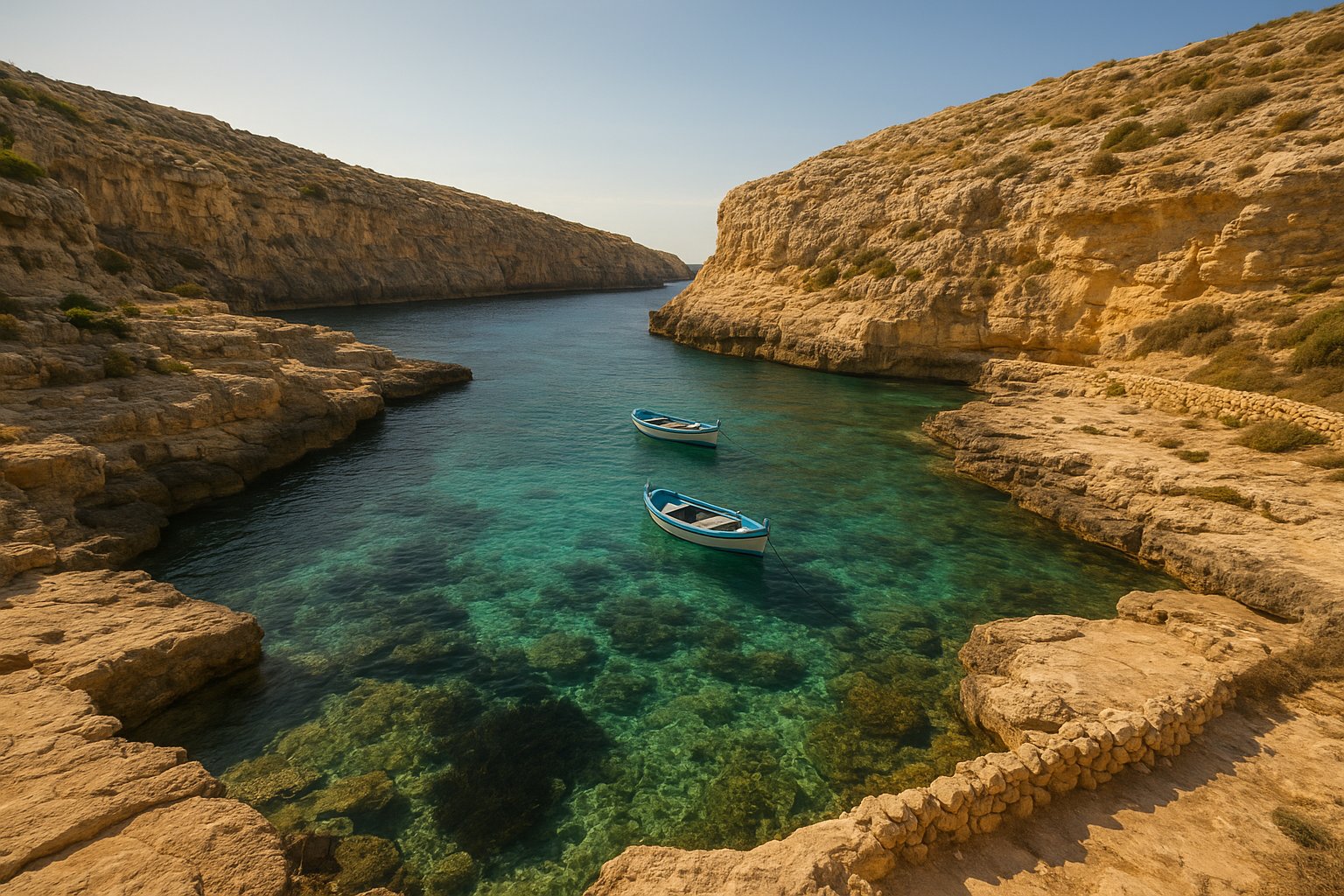
A deep, narrow inlet cutting into the limestone, with calm, clear water and rocky sides that give the snorkeling real character — one of the island's most sheltered swims when the wind is up elsewhere.
The inlet is small and popular with swimmers: check for boat and swimmer traffic, and ask locally about conditions before you head in.
04
Dwejra's Inland Sea and the outer reef
Lagoon📍 Dwejra, Gozo
A landlocked lagoon connected to the sea through a natural tunnel in the cliff, with small boats running out to the outside reef and caves. A sheltered, shallow first swim with a genuinely dramatic exit to open water.
Local boats work the tunnel and the outside reef — snorkel where you are not in their path, and treat the outside water as exposed.
05
Ramla Bay and the north-coast shallows
Shore reef📍 Ramla Bay and Gozo's northern coast
Gozo's one big sandy beach, with rocky edges and clear shallows where you can wade in and read the reef structure as you go. The calmest option on the days the west coast is taking swell.
Sandy beaches mean less life than rock — swim the rocky margins for the reef, and expect the north coast to hold more swell than the sheltered south.