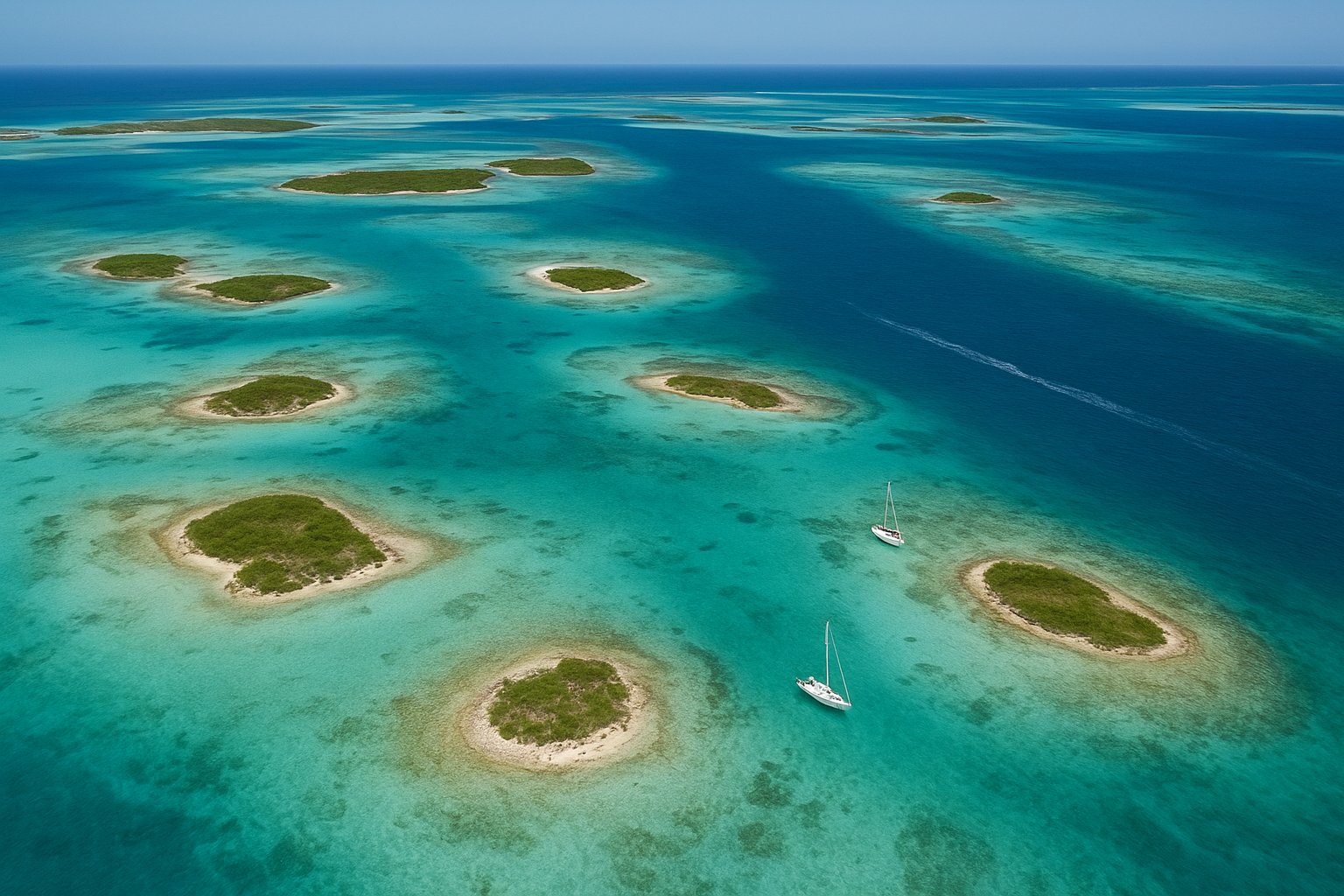
The distinctive underwater sights worth planning around. Descriptions are curated planning info — always verify local access, rules and conditions before you set out.
📍 Western end of the archipelago, Los Roques National Park
The archipelago's signature cay: two stretches of sand joined by a shallow sandbar, with calm, cut-crystal water on both sides and coral and reef fish in the shallows. Snorkeling here is about the clarity and the light rather than the scale of the reef — the kind of water you float in for an hour without covering much distance.
Los Roques is a national park: landing rules and what each cay allows should be confirmed with your operator, and whether you reach a cay at all depends on the boat and the day's wind.
02
The barrier reef (Barrera Arrecifal de Los Roques)
Reef📍 The archipelago's eastern, seaward edge
The long barrier reef along the outer edge of the archipelago — the structure the whole place depends on, sheltering the lagoon behind it. The shallow back-reef and the coral patches on the lagoon side are the snorkelable water; the seaward face drops into deeper, more exposed reef that is a boat-and-conditions decision rather than a casual swim.
Wind and swell decide whether a boat can work the outer reef at all — confirm the plan with your skipper, and treat the seaward face as diving and experienced-swimmer water rather than a snorkel site.
03
Francisquí cays & mangrove channels
Mangrove📍 Central archipelago, west of Gran Roque
A cluster of low cays threaded with shallow mangrove channels and sandy turtle-grass flats, in water calm enough to swim almost anywhere. The mangroves are the nursery for the archipelago's reef life, so the fish here are small and numerous rather than large — a gentler, greener snorkel than the open reef.
Channels and flats are shallow and easily damaged — stay off the bottom, never stand on coral or seagrass, and follow whatever the park and your operator require locally.
04
Dos Mosquises shallows
Seagrass meadow📍 South-west of Gran Roque, Los Roques National Park
Shallow seagrass flats and coral patches in the archipelago's south-west, where green turtles are regularly seen grazing — the same edge of the park that carries Los Roques' long-running marine research station, which is part of why the turtles here are watched as closely as they are.
Turtles are wild and protected: watch from a respectful distance, never touch or chase them, and verify current access and any landing restrictions with your operator.