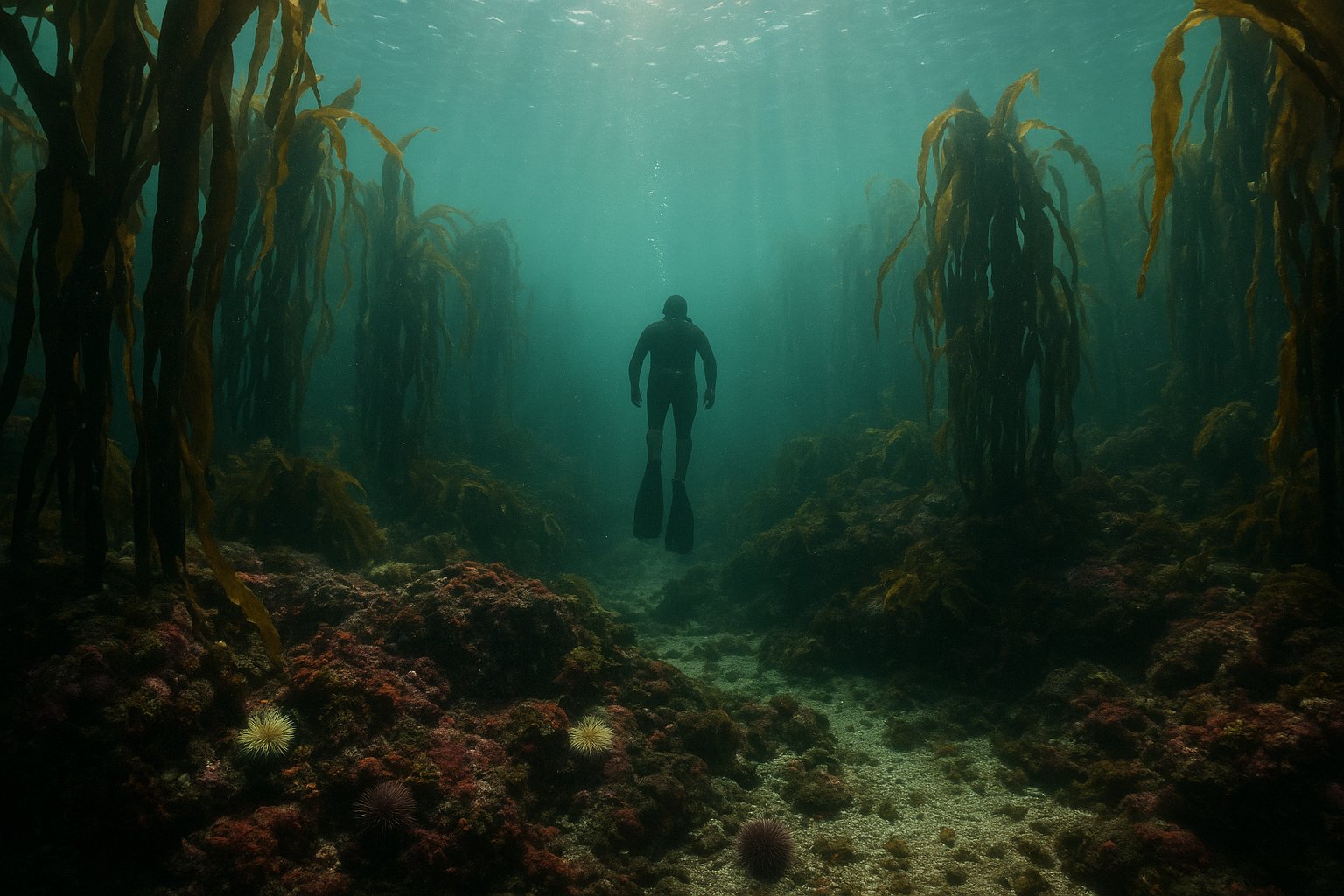
The distinctive underwater sights worth planning around. Descriptions are curated planning info — always verify local access, rules and conditions before you set out.
01
The Sound of Mull
Shore reef📍 Between the Isle of Mull and the Morvern mainland
A sheltered sound running between Mull and the mainland, with kelp forest, rocky walls and clear, cold water — the classic stretch of Scottish west-coast snorkeling, and the place to learn what a kelp forest actually looks like from the surface.
Cold-water site: a drysuit (or a good semi-dry with hood, gloves and boots) is the norm rather than an option, and the water stays cold year-round. Tides run hard in the sound and there is real boat traffic and ferry traffic — go with a local guide or dive boat that reads the tide for you.
02
Lamlash Bay No Take Zone, Isle of Arran
Marine reserve📍 Lamlash Bay, Isle of Arran
Scotland's first No Take Zone, where nothing may be removed from the sea or shore — which is exactly why the rocky reef, kelp and scallop beds here are worth looking at: it is a rare chance to see an unfished piece of Scottish coast.
The No Take Zone is legally enforced: take nothing, and check the current rules and boundaries before you swim. Tides and wind decide whether the bay is workable, and the water is cold — drysuit conditions.
03
St Abbs Head and the Eyemouth coast
Marine reserve📍 Berwickshire, Scottish Borders (east coast)
A voluntary marine reserve around a dramatic headland on Scotland's east coast, with kelp, gullies and famously clear water, plus seals that are used to swimmers. The most accessible cold-water snorkeling on this list.
Note the geography: this is the east coast, not the Hebrides, and a completely different trip from the Sound of Mull. Go with a local centre or guided group, respect the reserve's voluntary rules, and keep your distance from seals — never chase or corner them.
04
Basking sharks off the Hebridean coast
Megafauna point📍 The Sea of the Hebrides, off Coll and Tiree and the west coast
The world's second-largest fish, plankton-feeding at the surface in summer — the Hebrides are one of the best places on earth to encounter one. The reason many people first put a mask in Scottish water.
Strictly regulated and strictly seasonal: sightings are never guaranteed, and the Scottish wildlife-watching code requires you to keep your distance, never touch or obstruct the animal, and only enter the water with a licensed operator. Check the current marine-wildlife rules before you plan.