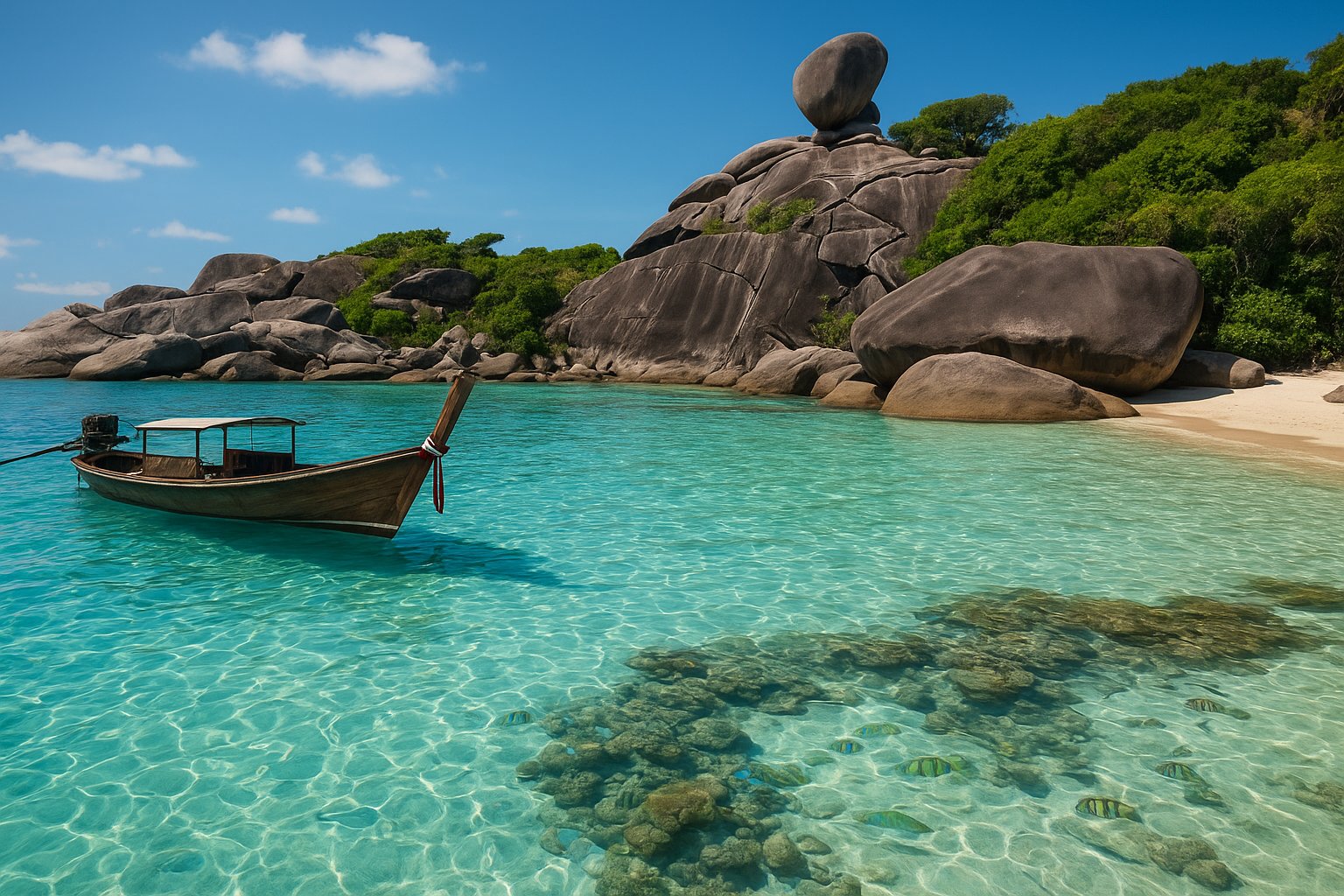
The distinctive underwater sights worth planning around. Descriptions are curated planning info — always verify local access, rules and conditions before you set out.
01
Similan Islands (Mu Ko Similan National Park)
Marine reserve📍 Andaman Sea, west of Khao Lak, Phang Nga province
Nine granite islands with pale boulder beaches, and the best-known snorkeling in Thailand: coral gardens and shallow reef between the boulders, in warm, usually clear water, reached by day boat or liveaboard from Khao Lak or Phuket. The same granite formations that make the tops so photogenic continue underwater as swim-throughs and reef slopes.
The park is seasonal. It opens broadly from mid-October to mid-May and closes to visitors through the southwest monsoon — the exact dates are set each year, so verify the current season locally before you book. The park's celebrated deep sites are dives; the snorkeling is the shallow fringing reef and the sheltered bays.
02
Surin Islands (Mu Ko Surin National Park)
Reef📍 Andaman Sea, north of the Similans, near the Myanmar border
Two main islands with fringing reef and calm, sheltered anchorages, further north and markedly quieter than the Similans. The shallow coral around the islands is genuinely snorkelable, and the park is also home to Moken (Chao Ley) communities whose villages sit inside it.
The neighbouring Richelieu Rock — the site everyone photographs — is an offshore pinnacle in current and is a dive site, not a snorkel site. The same national-park season applies here, the islands are reached on park-approved boats with park fees, and visiting a Moken village is a courtesy question rather than a stop on a schedule — ask your operator what is appropriate.
📍 Krabi province, Andaman Sea
Limestone islands a short boat ride from Phuket or Krabi, with shallow coral in places such as Loh Samah Bay and around Bamboo Island, plus the cliff scenery that made Maya Bay famous. The snorkeling is easy, warm and shallow — the classic Thai island day out.
Maya Bay has been closed to boats and swimming for reef recovery at times, and access has been managed and restricted since; verify what is currently allowed before you plan around it. This is genuinely crowded water with heavy boat traffic, so go early, use an operator who moors rather than anchors, and keep off the coral in the shallows where fins do the most damage.
📍 Gulf of Thailand, Surat Thani province
The Gulf side's snorkeling island, and the easiest water in the country to get into: bays such as Ao Leuk and Shark Bay, Sai Nang and Tanote Bay have coral and reef fish within wading depth of a beach, so you can snorkel without booking anything at all. Warm, shallow, forgiving water — which is exactly why it is also one of the world's busiest dive-training islands.
Koh Tao's calm window runs broadly the opposite half of the year from the Andaman's — roughly February to September — while the northeast monsoon months bring wind, rain and reduced visibility; verify conditions locally. Expect heavy diver and boat traffic in the popular bays, and check with a local operator before swimming beyond the sheltered shallows.
05
Phang Nga Bay & Ko Tapu ('James Bond Island')
Mangrove📍 Between Phuket and the mainland, Phang Nga province
A drowned karst landscape of limestone towers, mangrove channels and hongs — collapsed cave roofs you enter by sea kayak at the right tide — with the pin-shaped Ko Tapu the most photographed rock in Thailand. It is a wonderful day out, and one of the country's genuine highlights.
Do not plan this as a snorkel day. The bay's water is turbid with mangrove sediment and there is no reef to swim — the drama is entirely above and around the waterline, and the experience is kayaking, caves and views. We list it here so the distinction is explicit rather than left to a brochure to blur.