Best Snorkeling in Thailand
7 min read · Field guide
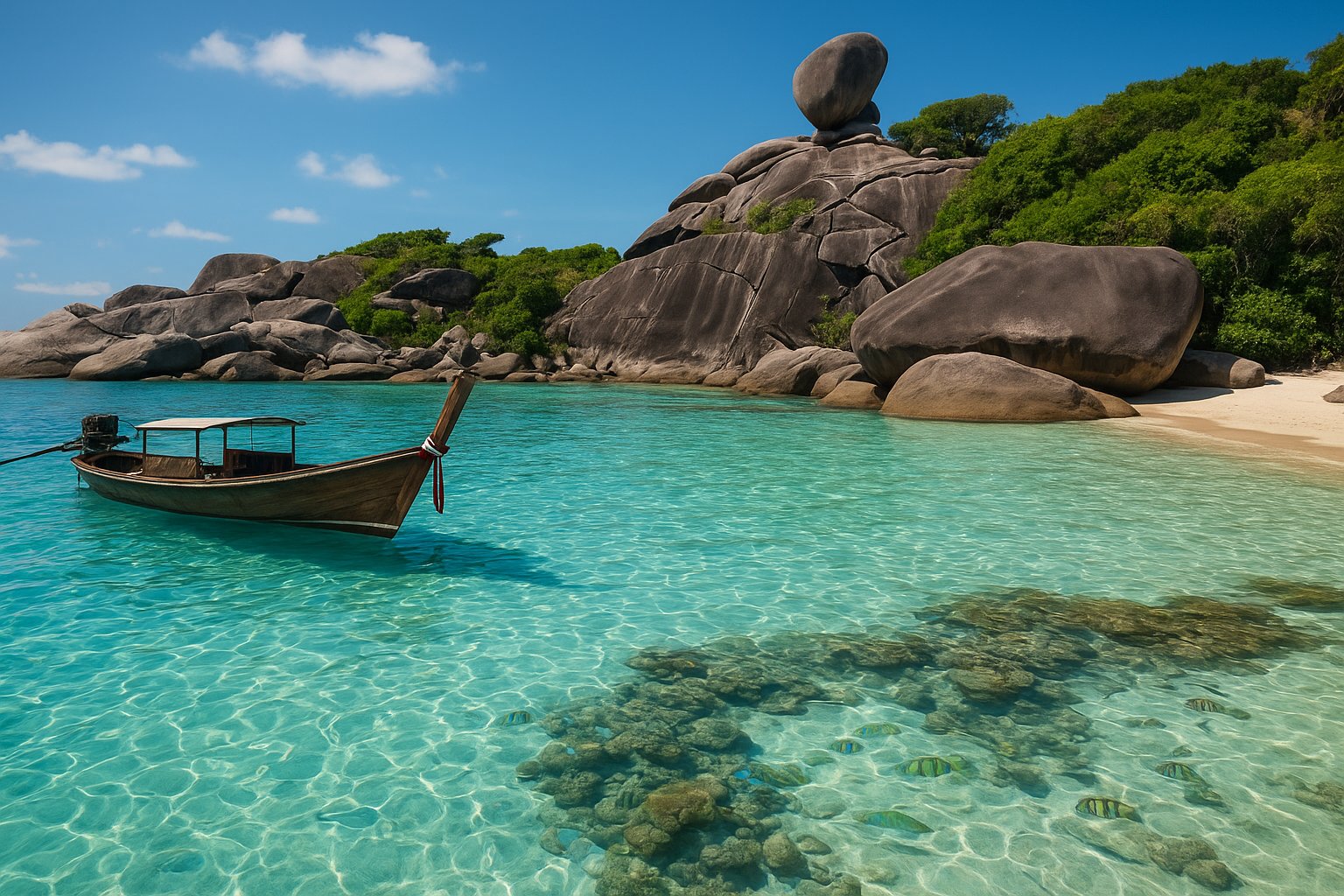
Thailand is not one snorkeling destination but two coasts running on opposite calendars. On the Andaman side, the Similan and Surin island groups and the Krabi coast deliver granite boulders, coral gardens and big visibility in the dry months — which is also when the national parks are open. On the Gulf side, Koh Tao is the easiest water in the country: shallow bays you wade into, warm and forgiving, with a calm season that falls in roughly the other half of the year. What Thailand is not is untouched: the popular sites are busy, some show real wear, and one of its most famous attractions is a scenery day rather than a snorkel. Go for range and convenience, and know which coast you are on.
Seasonal guidance, not a forecast — no live tide tables, weather or marine advisories here; check local conditions before you go.
Why snorkel Thailand
Because it is the easiest warm-water reef trip in the catalog to assemble. Flights are plentiful, the internal transport is cheap and well worn, boats run daily from dozens of jetties, and gear rental is everywhere. For a first reef trip, or for a trip with people of mixed confidence in the water, that infrastructure matters: you can snorkel from a beach in the morning and be at a different island by lunchtime without planning a thing.
The second reason is the range inside one country. Thailand's Andaman coast and its Gulf coast have different geology, different visibility and — crucially — different seasons, because the two monsoons arrive on opposite sides of the peninsula. That means that in most months one coast is working even when the other is not, and a two-week trip can be planned around the weather rather than against it.
- Granite boulder reefs and coral gardens in the Andaman's island parks
- Wade-in shore snorkeling in the Gulf, no boat required
- Two coasts with opposite seasons, so one is usually working
- Simple logistics: day boats, gear rental and cheap internal travel
- Warm water year-round, with no need for exposure protection in most months
Best sites to prioritize
The Similan Islands are the Andaman's headline, and the snorkeling genuinely holds up: nine granite islands with coral gardens and shallow reef between the boulders, in warm, usually clear water, reached by day boat or liveaboard from Khao Lak or Phuket. The catch is the calendar. Mu Ko Similan National Park opens broadly from mid-October to mid-May and closes through the southwest monsoon, and the exact dates are set each year — verify the current season before you book, because outside it there is no trip at all. The park's celebrated deep sites are dives; the snorkeling is the fringing reef and the sheltered bays.
The Surin Islands, further north and closer to the Myanmar border, are the same idea with far fewer boats: two main islands with fringing reef and calm anchorages, plus Moken communities living inside the park. The park season applies here too, park fees apply, and the site everyone photographs — Richelieu Rock — is an offshore pinnacle in current and a dive site rather than a snorkel site. If you want a beach entry to the Gulf, Koh Tao is where to go: Ao Leuk and Shark Bay, Sai Nang and Tanote Bay have coral and reef fish within wading depth, warm and shallow, which is exactly why Koh Tao is also one of the busiest dive-training islands in the world. Its calm window runs broadly February to September, while the northeast monsoon months bring wind, rain and reduced visibility.
Phi Phi, a short boat ride from Phuket or Krabi, is the easy limestone-island day: shallow coral at sites such as Loh Samah Bay and around Bamboo Island, plus the cliff scenery that made Maya Bay famous. Two honest caveats. Maya Bay has been closed to boats and swimming for reef recovery at times and has been managed and restricted since, so check what is currently allowed before planning around it. And this is genuinely crowded water with heavy boat traffic — go early, choose an operator who moors rather than anchors, and keep your fins off the coral in the shallows.
Finally, the site that gets mistaken for a snorkel destination: Phang Nga Bay and its pin-shaped Ko Tapu, the 'James Bond island', between Phuket and the mainland. It is a drowned karst landscape of limestone towers, mangrove channels and hongs — collapsed cave roofs you enter by sea kayak at the right tide — and it is one of the country's highlights. It is also not a snorkel site: the water is turbid with mangrove sediment and there is no reef to swim, because the drama is entirely above and around the waterline. Book it as a kayaking and scenery day and you will love it; book it expecting coral and you will spend the afternoon looking at brown water.
When to go & conditions
Think in two coasts rather than two seasons. The Andaman side runs on the southwest monsoon: the dry, calm, clear window is broadly November to April, which is also when the Similan and Surin national parks are open and when the west-coast islands are at their best. From roughly May to October the southwest monsoon brings wind, rain and swell to the Andaman coast, parks close, and many west-coast operators stop running.
The Gulf side runs on the northeast monsoon, and its calm window falls broadly in the other half of the year — roughly February to September — while the northeast monsoon months bring wind, rain and reduced visibility to Koh Tao and the Gulf islands. The practical consequence is the useful one: outside the peak of either monsoon, one coast is usually workable, and a flexible itinerary can follow the weather across the peninsula rather than committing to a coast in advance.
Water temperature stays warm enough for a rashguard in every month, so temperature is rarely the planning question here — wind, rain, visibility and park closures are. Tides matter at the shallow reef sites and around the granite boulders, where a low water can leave very little depth over coral, and strong currents can run at the island channels. Verify the park season, the day's marine forecast and the local tide before you commit, and treat your skipper's call as the final word.
Practical tips
Decide the coast before you book flights, because the two are not interchangeable and are not close to each other. Phuket, Khao Lak and Krabi serve the Andaman and the Similan and Surin parks; Surat Thani, Koh Samui and Chumphon serve the Gulf and Koh Tao. Crossing between them is a long day of road and boat or a flight, so a trip that tries to do both in a week spends most of it travelling.
Book the island parks through operators with park-approved boats, and expect park fees to be part of the day rather than a surprise. The Similans in particular are a national park with real rules, ranger stations and no independent access — you go on a licensed boat or you do not go. Liveaboards out of Khao Lak are the way to see more of the park with fewer other boats, and they book out well ahead in the high season.
Treat the busy water with respect. Thailand's popular sites carry a lot of boats and a lot of divers, and the coral closest to the busiest moorings shows it. Stay close to your own boat, use a marker float where there is traffic, never stand on or touch coral, and choose operators who moor rather than anchor. If you want quieter water, the Surin Islands and the less famous Krabi sites are where to look rather than the most photographed ones.
Pack light and warm-weather: mask, fins and a rashguard of your own if you care about the fit, reef-safe sunscreen, a dry bag, and a light long-sleeve layer for the boat. Bring booties for rocky entries at the granite islands. Insure yourself for boat-based water activities specifically, and note that private hospitals in Thailand are excellent and expensive while public facilities outside the big cities vary — the travel admin panel on the destination page carries the verified numbers and hospital details.
Planning this trip?
Get the whole journey built end-to-end — flights, stays, boat days, gear and day-by-day timing notes — by the Double Fathom Concierge for a one-time $29. Re-plan any time, chat support through the trip, a destination-specific packing list, curated off-menu operators, and a printable offline PDF itinerary.
Secure checkout by Stripe — pay by card, receipt by email. A one-time, per-trip purchase — nothing recurring, and no rush either way.
Get the occasional best-reef dispatch
Trip-planning tips, seasonal reef picks and new-destination notes. No spam, unsubscribe anytime.
Explore the destination
Thailand snorkels on two coasts that run on opposite clocks. The Andaman side — the Similan and Surin island groups, Phi Phi, and the Phang Nga coast — is the classic: granite boulders, coral gardens and big visibility in the dry, calm months, which is also when the national parks open. The Gulf side, and Koh Tao in particular, is the easy end of Thai snorkeling: shallow bays you wade into, warm water, and a calm season that falls in roughly the other half of the year. Thailand is not the place to expect untouched reef, and its busiest sites show real wear and real boat traffic — but the range is enormous, the logistics are simple, and the country has one honest trap worth naming up front: Phang Nga Bay and its James Bond island are a scenery-and-kayaking day, not a snorkeling destination.
Thailand destination guide →