Best Snorkeling in the Daymaniyat Islands
5 min read · Field guide
The Daymaniyat Islands are a small nature reserve in the Gulf of Oman, reached by boat from Muscat or Al Sawadi, and they hold the best shallow reef water in the country: coral gardens and fish life that is genuinely rich by Gulf standards, in a few metres of clear, warm water. One fact shapes every trip. The reserve closes to visitors through turtle-nesting season, roughly May to October, so snorkeling here happens in roughly November to April and at no other time of year. Plan inside that window and this is a real, well-managed Gulf reef. Plan outside it and there is no trip at all.
Seasonal guidance, not a forecast — no live tide tables, weather or marine advisories here; check local conditions before you go.
Why snorkel the Daymaniyat Islands
Because this is where the Gulf of Oman turns into reef. The Gulf is not generally thought of as coral country — it is hot, saline and often hazy — but the Daymaniyat group, sitting offshore from the Al Baturnah coast between Muscat and Al Sawadi, is an exception: a protected island cluster with coral gardens in a few metres of water and noticeably more life than the surrounding sea. It is the best shallow-water snorkeling in Oman, and it is protected as a nature reserve precisely because of that.
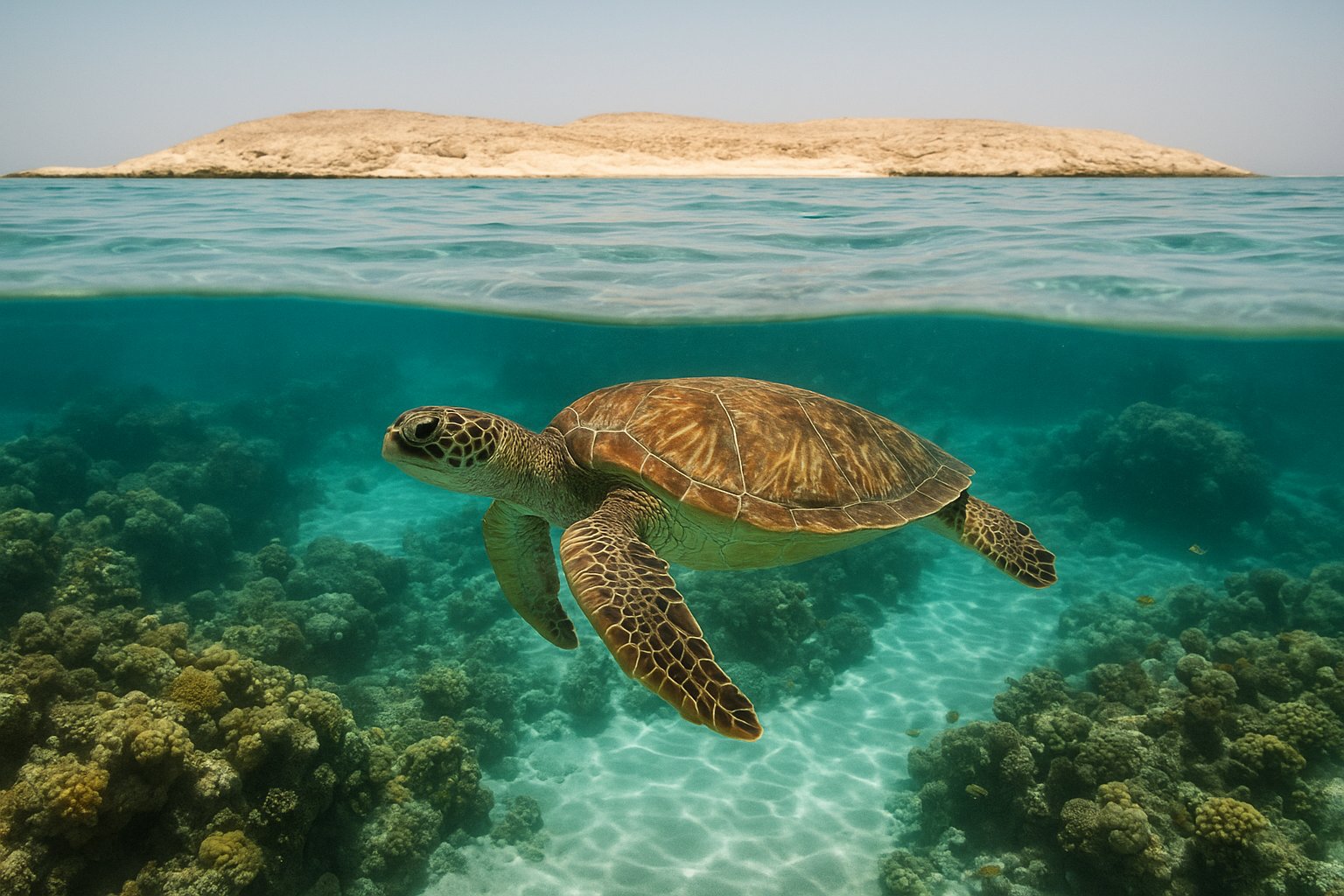
The second reason is that the whole experience sits inside snorkeling range. Unlike the region's dive sites, where the interesting water is at depth, the reef flats around these islands are shallow enough that a snorkeler sees the best of them without a tank: coral heads, reef fish, morays and the turtles the reserve exists to protect. Access is by boat, so you are with a skipper who knows the channels, and the trip is a short run from the mainland rather than an expedition.
- Coral gardens in a few metres of water, all inside snorkel range
- Unusually rich fish life for the Gulf of Oman
- A protected nature reserve with managed boat access
- Short boat runs from Muscat and Al Sawadi rather than a long crossing
- Sheltered anchorages that stay swimmable when the open Gulf is rough
Best sites to prioritize
The heart of the trip is the reserve's reef flats: coral gardens in a few metres of water around the islands, with the richest shallow fish life in the country and turtles moving through it. Everything worth seeing happens in snorkel range, which is exactly what makes this group Oman's snorkeling destination rather than just another dive site. The sheltered western bays are where most of the actual swimming happens — the calm anchorages on the islands' leeward side, where the water settles flat enough to snorkel even when the open Gulf is choppy — over sand and shallow coral heads.
Landing is restricted, and that is deliberate: these islands are a nesting site, and the beaches are left undisturbed so the turtles can use them. There is no shore access to any of this, so you arrive by boat from Muscat or Al Sawadi — typically on a local operator's day trip — and you stay in the water and on the boat.
Then the honest boundary. Outside the shallow flats, the reef around the Daymaniyats falls away into deeper water, and those drop-offs are what local dive boats work. The larger fish life the Gulf is not usually known for is down there, out of snorkeling range. The snorkeling you are here for is the flats and the bays, and it is worth being clear with any operator you book that snorkeling — not diving — is the plan, because the two trips go to different places.
If the wind rules out the reserve, Oman has a nearby alternative worth knowing. Bandar Khayran, an inlet of coves, mangrove stands and small islands just east of Muscat, stays flat when the open coast does not, and local operators run boat days there year-round. It is shelter rather than a park — little infrastructure, no signage — so go with a local skipper who knows the channels. Fahal Island, in open water off Muscat, is the other local option: a small rocky island with coral around its flanks and a long-established diving scene, though only the shallower shelf is in snorkel range and the island has no shelter of its own.
When to go & conditions
This is the one destination in the catalog where the season is set by a closure rather than by weather. The Daymaniyat Islands Nature Reserve closes to visitors during turtle-nesting season, roughly May to October, which leaves roughly November to April for snorkeling. The dates in force are set by the authorities and can be extended, so verify the current closure locally before you book anything — this is not a guideline to work around, it is the difference between a trip and a wasted day at the marina.
Inside the open season, the cool months are also the comfortable ones: winter and early spring bring mild air temperatures and calmer, clearer water on the Gulf coast, while late spring runs hotter on land and closer to the nesting closure. Water in the Gulf of Oman stays warm enough for a rashguard or a thin shorty through the open season.
Wind decides the individual day. The Gulf of Oman gets a persistent northerly that can chop up exposed water, which is why the reserve's leeward bays and nearby Bandar Khayran matter so much: shelter is what makes a day workable, and a good skipper will move the plan rather than cancel it. Tides matter less here than on reef-edge destinations, but the shallow flats do fish better and read more clearly on a settled tide. Verify the day's marine forecast and the reserve's status locally before you commit.
Practical tips
Book the boat first and build the trip around it. There is no shore access to the reserve, so a local operator's day trip from Muscat or Al Sawadi is the only route in, and the season's window is short enough that the good weekends fill. Confirm explicitly that your trip is a snorkel trip, that it is going to the reserve rather than a dive site, and that it is running inside the open season.
Bring your own mask, snorkel and fins. Rental availability is limited and the fit of a borrowed mask is the most common thing that spoils a good reef day. Add a rashguard or thin shorty, reef-safe sunscreen, a dry bag, and a light layer and hat for the boat — Gulf sun on open water is severe even in winter. Booties are useful if you plan any shore entry at Bandar Khayran.
Follow the reserve's rules without inventing workarounds. Landing is restricted to protect nesting beaches, so do not swim ashore or walk the islands, and do not approach, touch or block a turtle — give them space and let them surface. Never stand on or touch coral, and keep your fins clear of the flats, which are shallow enough that a careless kick does real damage.
Two practical Omani notes. Alcohol is available in licensed venues such as hotels and restaurants but not in public, and the legal drinking age is 21; and some prescription and over-the-counter medicines that are routine elsewhere are illegal in Oman, so check any medication before you travel rather than at the airport. The UK FCDO's travel advice for Oman is the reliable place to read the detail, and the travel admin panel on the destination page carries the verified emergency number and hospital information for the Muscat area.
Planning this trip?
Get the whole journey built end-to-end — flights, stays, boat days, gear and day-by-day timing notes — by the Double Fathom Concierge for a one-time $29. Re-plan any time, chat support through the trip, a destination-specific packing list, curated off-menu operators, and a printable offline PDF itinerary.
Secure checkout by Stripe — pay by card, receipt by email. A one-time, per-trip purchase — nothing recurring, and no rush either way.
Get the occasional best-reef dispatch
Trip-planning tips, seasonal reef picks and new-destination notes. No spam, unsubscribe anytime.
Explore the destination
The Daymaniyat Islands are a small nature reserve in the Gulf of Oman, reached by boat from Muscat or Al Sawadi, and they hold the best shallow reef water in the country: coral gardens and notably rich fish life for the Gulf, in a few metres of clear, warm water. The one fact that shapes every trip is a closure — the reserve shuts to visitors through turtle-nesting season, roughly May to October, so snorkeling here happens in roughly November to April and at no other time. Plan around that window and this is a genuine, well-managed Gulf reef; ignore it and there is no trip at all. Oman has other sheltered water nearby, including Bandar Khayran's coves and mangroves, which is where local operators go when the wind is up.
Daymaniyat Islands destination guide →