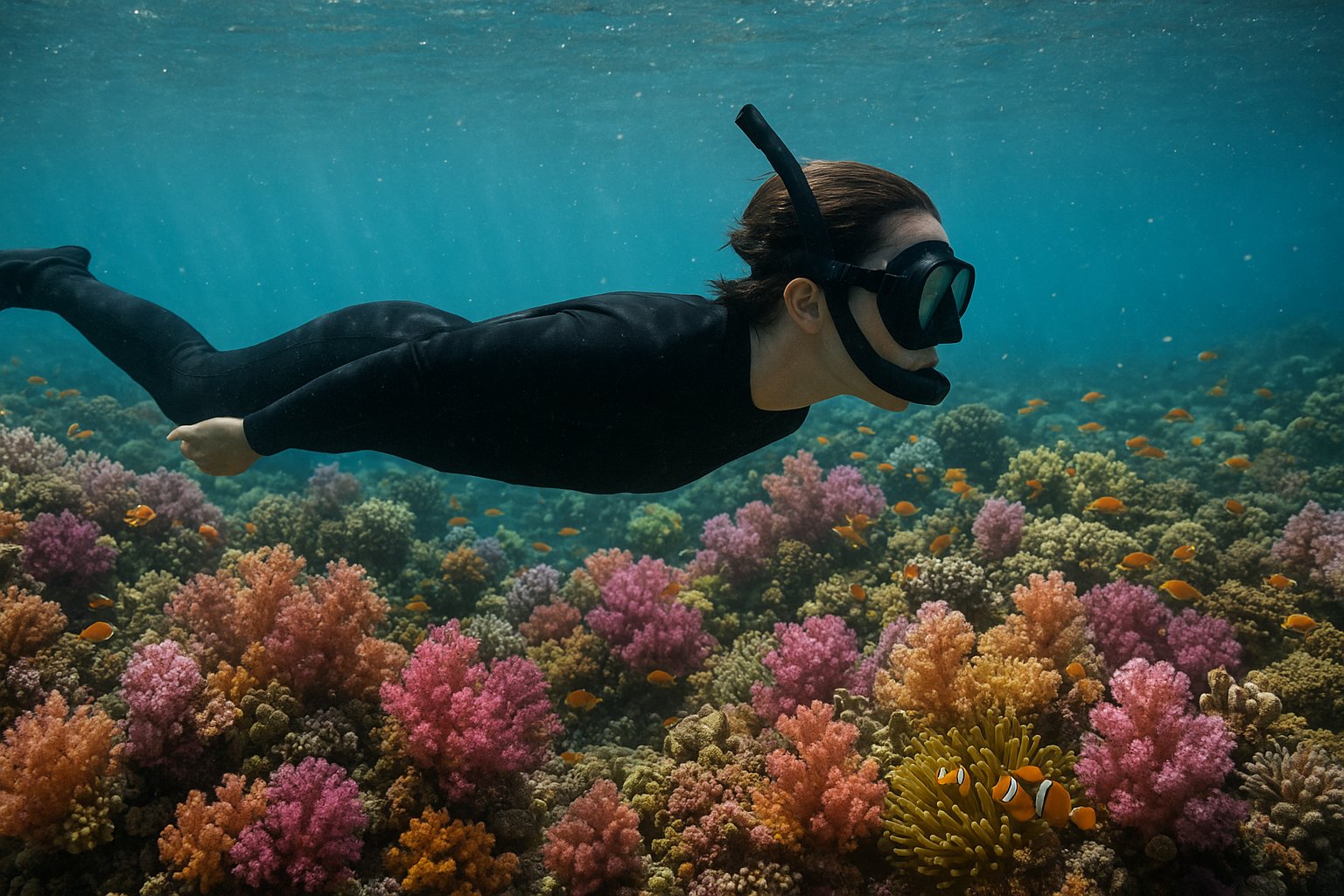
Best Snorkeling in Fiji
6 min read · Field guide
Fiji rewards a snorkeler with warm water, calm lagoons and a lot of choice: the sheltered Mamanucas and Yasawas near Nadi, the soft-coral reefs of Taveuni in the north, the protected water of Beqa Lagoon in the south, and fringing reef along the Coral Coast of Viti Levu. It is an island country, so the trip is really a choice of area — and it comes with an honest caveat, because Fiji's most famous soft-coral sites and its shark feed are dives rather than snorkels. Get the areas right and it is one of the easiest places in the Pacific to spend a week in the water.
Seasonal guidance, not a forecast — no live tide tables, weather or marine advisories here; check local conditions before you go.
Why Fiji is great for snorkeling
The country's geography does the work. Fiji is a scatter of volcanic islands with barrier and fringing reefs around them, which means calm, shallow lagoon water inside the reef and, in the right straits, nutrient-rich current outside it. That combination is what makes Fiji a soft-coral destination — the current feeds the corals that give the reefs their colour — and it is also why the classic dive sites and the easy snorkel sites sit in the same country but not the same water.
For a snorkeler the appeal is accessibility. In the Mamanucas and Yasawas, coral and fish are a short swim from a beach or a few minutes by boat; water stays warm through the year; and the reef is shallow enough to read from the surface. Fiji is also genuinely welcoming to travellers who want to base themselves on one island and snorkel every day rather than chase an itinerary.
- Warm water year-round, with easy shore and short-boat access in the lagoons
- Soft-coral reefs — the colour is the point, and current is what creates it
- Several distinct areas to choose from rather than one crowded site
- Village-based stays that put you near reef most visitors never reach
Best sites to prioritize
If you want the simplest possible trip, base in the Mamanucas: a cluster of small islands and reef-fringed motus within easy reach of Nadi, with shallow coral gardens, sandy channels and calm lagoon water. Much of it is a swim from a resort beach or a short boat hop, which is why the group carries a large share of Fiji's snorkeling — and why the reef nearest the busiest beaches shows the most wear. The Yasawas, further north-west, are the same idea with more space: long volcanic islands, white-sand beaches and shallow lagoon water, including the stretch known as the Blue Lagoon.
Rainbow Reef off Taveuni is Fiji's famous name, and it needs the most careful handling. It is a soft-coral icon, and it is a dive destination: the strait's current is what makes the coral flourish and what makes the classic sites dive-depth. A snorkel here means the shallow reef shelf and sheltered bommies on a slack tide with a guide — not the wide-angle soft-coral dives in the photographs. If that is genuinely what you are after, be honest with yourself and dive it instead.
Beqa Lagoon, in the south near Pacific Harbour, is a large lagoon held behind barrier reef with shallow coral patches that do suit snorkelers — and a famous shark aggregation at Shark Reef. The shark encounter is a baited dive at depth inside a marine reserve, and it is not a snorkel; what a snorkeler gets from Beqa is the lagoon's calm inner water and its coral, which is plenty.
For a mainland option, the Coral Coast on Viti Levu's south side has fringing reef close to shore, so on the right tide you can snorkel off a beach over coral heads and rock with no booking at all. It is a first-day or last-day swim near Nadi rather than the reason for the trip — and the tide and shorebreak decide whether it happens.
When to go & conditions
Fiji has a cooler, drier season broadly from May to October and a warmer, wetter season broadly from November to April. The drier months bring steadier trade winds, more reliable boat days and the most comfortable water; the wetter season is hotter and more humid with heavier rain, and it is also the South Pacific cyclone season, so travel plans need flexibility then.
Water temperature stays warm enough for a rashguard or shorty most of the year, cooling slightly in the drier months. Visibility varies with the plankton and with runoff after heavy rain, which is one more reason the drier months tend to be the picture-postcard ones — and one more reason to plan lagoon days with a weather eye.
Tides and current are the real variables, especially at the reef edges and in the straits. A shallow fringing reef at low tide can leave very little depth, while the reef edge can carry current on the moving tide; in the Somosomo Strait at Taveuni the tide is what makes the sites work at all. Ask locally about the tide and the day's flow before you commit, and treat any pass or strait as a decision for the day.
Practical tips
Fiji's reef is often village reef. Much of the coast is customary land, and access to a beach or a reef may depend on the village that holds it — ask before you snorkel off a village beach, respect tabu (no-take) areas, and arrange boats through your guesthouse or resort rather than turning up and expecting one. Being invited in is normal; assuming is not.
Boats and boat lanes are the everyday hazard in the popular island groups: there is real traffic between the Mamanucas and around the resort beaches, so swim with a marker float, keep out of the channels, and snorkel in the morning when the water and the traffic are both quieter.
Pack for warm water and hard ground: rashguard or thin shorty, booties for the coral and rock entries on the Coral Coast, a dry bag for boat transfers, and reef-safe sunscreen. Island transfers run on island time — allow slack in the plan, and keep boat days flexible rather than booking a trip that has to happen on one specific morning.
Planning this trip?
Get the whole journey built end-to-end — flights, stays, boat days, gear and day-by-day timing notes — by the Double Fathom Concierge for a one-time $29. Re-plan any time, chat support through the trip, a destination-specific packing list, curated off-menu operators, and a printable offline PDF itinerary.
Secure checkout by Stripe — pay by card, receipt by email. A one-time, per-trip purchase — nothing recurring, and no rush either way.
Get the occasional best-reef dispatch
Trip-planning tips, seasonal reef picks and new-destination notes. No spam, unsubscribe anytime.
Explore the destination
Fiji is several snorkeling areas in one country rather than a single site: the sheltered lagoons of the Mamanucas and Yasawas within reach of Nadi, the soft-coral reefs off Taveuni in the north, the protected water of Beqa Lagoon in the south, and fringing reef along Viti Levu's Coral Coast. Warm water and calm lagoon days make it one of the friendliest places in the Pacific to get in — with the honest caveat that the country's famous soft-coral dives and its shark feed are dives, not snorkels.
Fiji destination guide →