Best Snorkeling in Komodo
6 min read · Field guide
Most people come to Komodo for the dragons — but the water around the park is the real reason ocean lovers return. Straddling the convergence of strong currents between the islands of Flores, Komodo and Rinca, this Indonesian national park funnels plankton-rich water through channels that draw reef mantas to shallow cleaning stations. It's wilder and less forgiving than Raja Ampat, but for a confident snorkeler it's an unforgettable megafauna frontier.
Seasonal guidance, not a forecast — no live tide tables, weather or marine advisories here; check local conditions before you go.
Why Komodo is great for snorkeling
Komodo National Park is a current-driven ecosystem, and currents are exactly what bring the big life in. Tidally flushed channels draw plankton and the filter-feeders that chase it — above all manta rays, which hover at cleaning stations to be groomed of parasites. For a snorkeler, that's a genuinely wild, active reef experience rather than a slow drift over coral.
It helps that the park is strictly managed and relatively lightly visited by global standards, so the reef remains lively and the animals less flighty. It's not a place to be casual in the water — but that's part of the appeal.
Best sites to prioritize
The manta cleaning points at Mawan and Karang Makassar are the park's headline snorkel — drop-offs and cleaning stations where reef mantas gather. They're seasonal and tide-dependent, so take your timing from your operator's local knowledge.
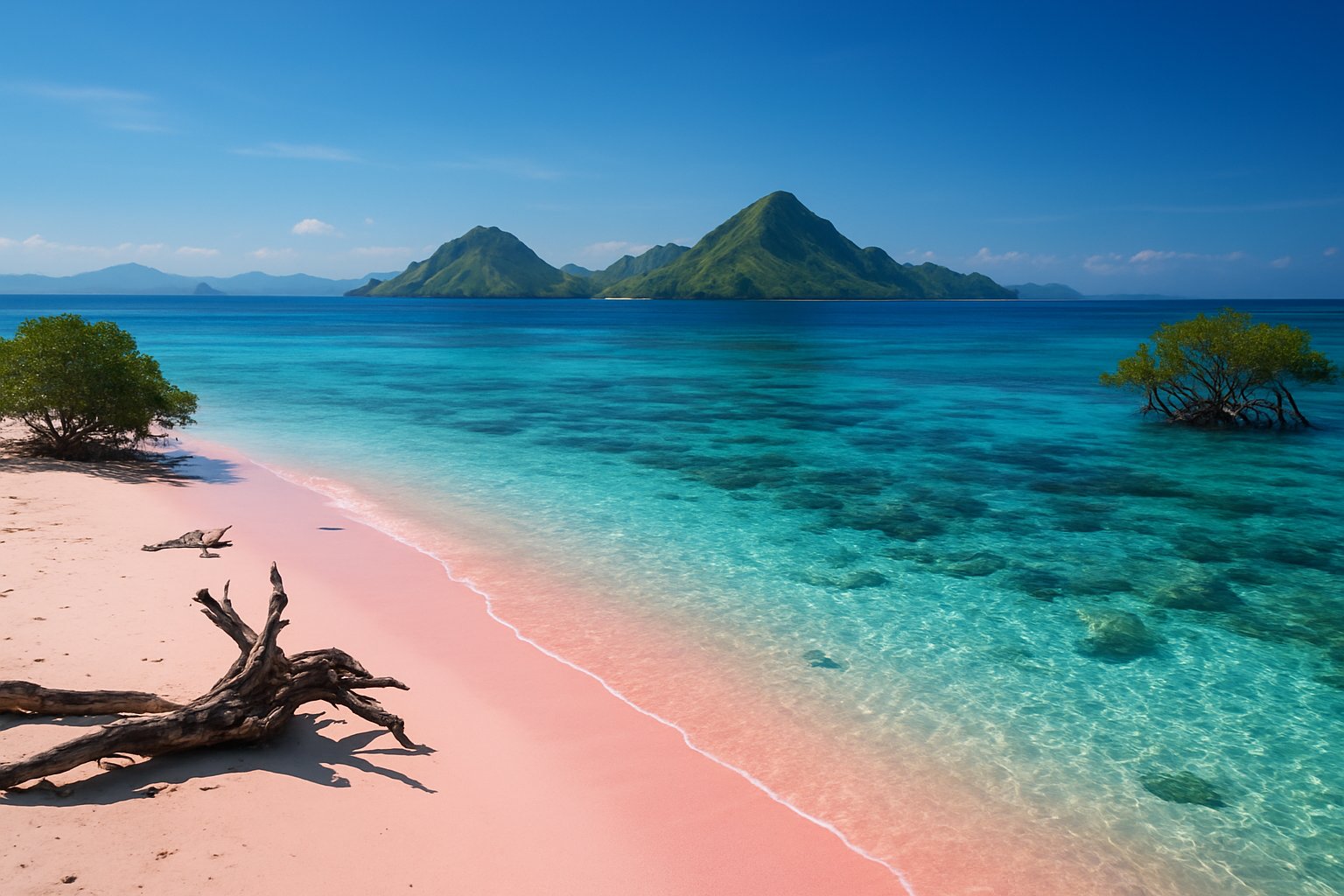
Pink Beach (Pantai Merah) is a calm, colourful reef stop whose sand gets a rosy blush from fragments of red organ-pipe coral. Kanawa Island offers an easy, relaxed shore-style snorkel that's a gentler counterpoint to the channel sites, while Gili Lawa Darat rewards the confident with current-swept cliffs and dense fish life — clearly not a beginner swim.
When to go & conditions
The productive plankton season and the best manta-cleaning action peak in the wetter months, roughly December to March, when nutrient-rich water flows hard through the channels. The dry season, roughly April to November, is calmer, sunnier and more comfortable, with slightly less predictable megafauna.
Water is warm (typically 26–29°C) year-round. Because tides and currents drive everything, conditions can swing dramatically within a single day — trust the local tide tables over any season guide.
Practical tips
Komodo is boat-based: day trips and park boats leave from Labuan Bajo on the island of Flores, the gateway, while liveaboards cover the deeper and remoter channels. This is not a gentle drift — heed your operator's calls on tidelines and be ready to fin hard or ride a float.
Respect the park's distance rules at the manta stations and give the animals room. Back on land, the Labuan Bajo harbour-front grill row serves the day's squid and reef fish charred over coals — a fitting end to a day spent in the same water.
Planning this trip?
Get the whole journey built end-to-end — flights, stays, boat days, gear and day-by-day timing notes — by the Double Fathom Concierge for a one-time $29. Re-plan any time, chat support through the trip, a destination-specific packing list, curated off-menu operators, and a printable offline PDF itinerary.
Secure checkout by Stripe — pay by card, receipt by email. A one-time, per-trip purchase — nothing recurring, and no rush either way.
Get the occasional best-reef dispatch
Trip-planning tips, seasonal reef picks and new-destination notes. No spam, unsubscribe anytime.
Explore the destination
Mantas, sharks and current-swept walls in a dramatic archipelago. The water is rich and the reef drop-offs are spectacular — best for confident swimmers who can hold a line and a reference point.
Komodo destination guide →