Best Snorkeling in Ningaloo Reef
5 min read · Field guide
Ningaloo is the other Australian reef: a World Heritage-listed fringing reef on Western Australia's Cape Range coast, where coral gardens begin a short swim from the beach and the reef edge draws whale sharks in within a few kilometres of shore. It is genuinely one of the best places on Earth to swim with whale sharks — and equally genuinely remote, seasonal and regulated, which is what this guide is for.
Seasonal guidance, not a forecast — no live tide tables, weather or marine advisories here; check local conditions before you go.
Why snorkel Ningaloo Reef
Because it is a true fringing reef, and that changes everything about how you snorkel it. Ningaloo hugs the coast of Western Australia's Cape Range peninsula, so the coral begins a few fin-kicks from the sand at sites like Turquoise Bay, Oyster Stacks and Coral Bay — no day-boat, no crossing, no pontoon. For a World Heritage reef, that proximity is unusual, and it is the reason Ningaloo rewards a slow, self-guided week rather than a single booked boat day.
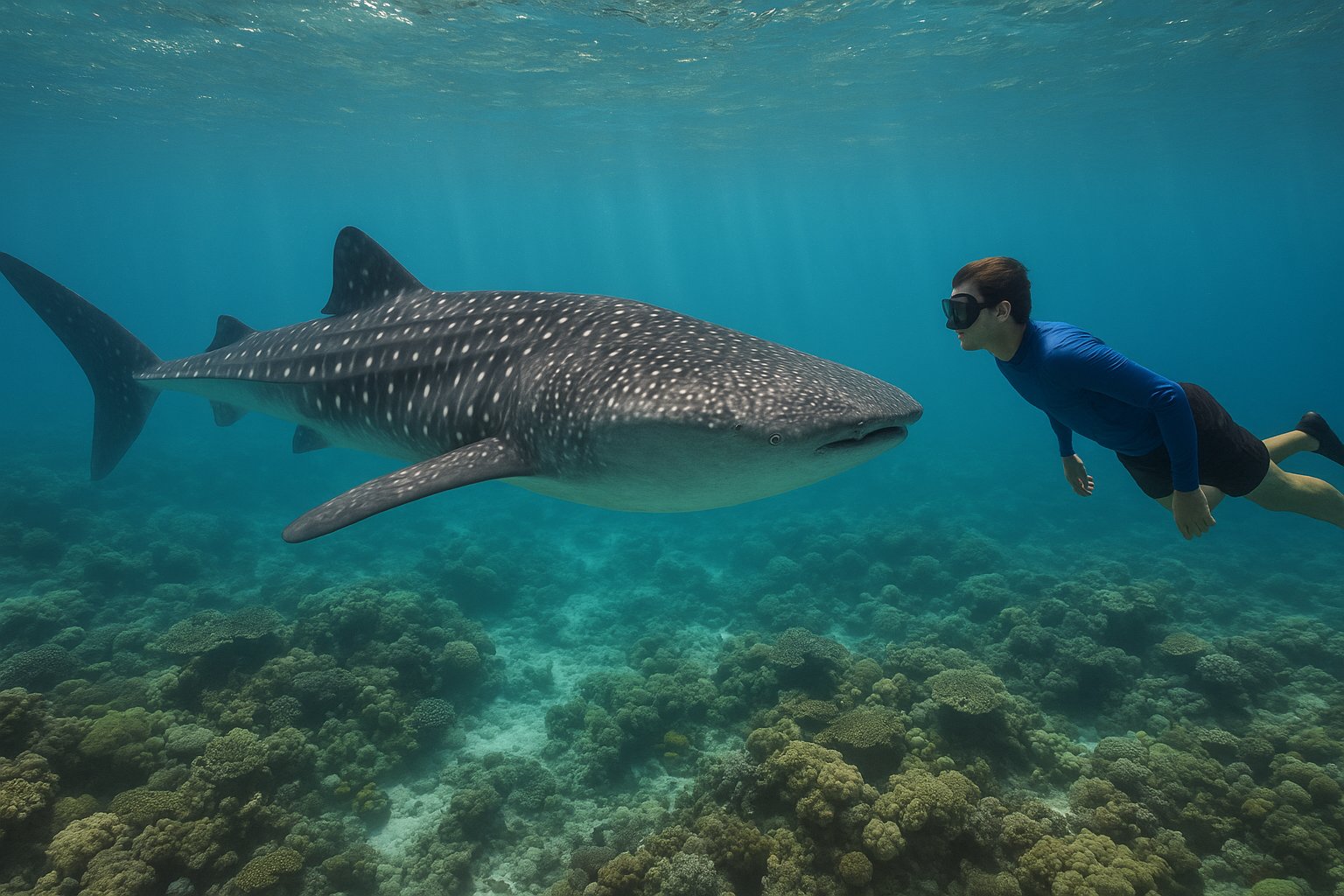
The second reason is the whale sharks. The reef edge here draws an annual aggregation close inshore, and Ningaloo is widely regarded as one of the most reliable places on Earth to swim alongside them. Be honest with yourself about what that means: it is a wild-animal encounter in a licensed, tightly managed season, not a guarantee, and the rules exist because the animals need the water to stay theirs.
- World Heritage-listed fringing reef on Western Australia's Cape Range coast
- Coral gardens a short swim from the beach — shore-first snorkeling, not a boat day
- One of the world's most reliable whale-shark encounters, roughly March to August under licence
- Sanctuary zones and a regulated marine park, so the fish life is relaxed
Best sites to prioritize
Start with the Exmouth stretch. Turquoise Bay is the signature: you walk up-current and drift back over coral gardens with turtles, rays and reef fish, which is the most enjoyable hour of snorkeling on the reef for most people. Oyster Stacks, a little further north, is the shallow one — coral bommies in a few metres of water, best around higher water and closed at low tide.
Then Coral Bay at the southern end. Bills Bay is the calmest and most protected water on Ningaloo, with coral metres from the beach and turtles in the shallows: the easy, forgiving end of the reef and the right choice if you are snorkeling with children or want flat water regardless of the wind. Osprey Bay, back on the Cape Range stretch, is the quiet alternative — a sheltered bay inside a sanctuary zone where the fish are notably relaxed, reached by road and a short swim from the sand.
Beyond the shore, the reef edge is where the whale sharks are, and that is a licensed boat day rather than something you wade into. The licensed season and the operator licensing are what make the encounter sustainable; every credible operator works to the same in-water rules on approach distance, group size and how many swimmers are in the water at once.
When to go & conditions
Two clocks matter, and they are not the same clock. The first is weather: the dry season, roughly April to October, brings the steadiest days and the clearest water on the reef, while midsummer is hotter on land and more unsettled on the water. The second is the whale sharks, which gather along the reef edge roughly March to August, with the aggregations at their most consistent through the autumn months. Book a licensed swim well ahead — the small towns of Exmouth and Coral Bay fill up in season.
The individual day is decided by wind and swell. Ningaloo is open-coast snorkeling rather than a lagoon, so the afternoon sea breeze matters and mornings are reliably the calmest, clearest window. Shore sites are exposed to whatever the ocean is doing; check the tide for Oyster Stacks and the shallow reef flats, and treat any sanctuary-zone or access closure as final. Verify the day's marine forecast, tide and any closures locally before you plan.
Practical tips
Build the trip around being there rather than around a list of sites. Ningaloo is remote: most visitors fly into Learmonth near Exmouth or drive the long highway north from Perth, then base themselves in Exmouth or Coral Bay. Services are thin by Australian east-coast standards, accommodation is limited, and a hire car makes the shore sites genuinely usable. Book lodging and any licensed whale-shark swim ahead.
Bring your own mask, snorkel and fins, plus a rashguard or thin shorty — the sun is fierce and a light layer means fewer sunscreen reapplications. Reef-safe sunscreen, a dry bag and a wind layer for the boat round out the kit. Booties help at the rockier entries.
Follow the marine park rather than working around it. Ningaloo is zoned: sanctuary zones prohibit fishing and collecting, and the whale-shark rules on approach and in-water behaviour are enforced. Never stand on or touch coral, never feed or chase marine life, and accept both the season and the closure of a site on the day. This is the destination in our catalog where the reef genuinely starts at the beach, and keeping the rules is what keeps that true.
One practical Australian note. Emergency calls are free from any phone and 000 is the national emergency number for police, fire and ambulance; in the outback, help can take hours to reach you, so tell someone where you are going and when you expect to be back. The travel admin panel on the destination page carries the verified entry, health and hospital information for this trip.
Planning this trip?
Get the whole journey built end-to-end — flights, stays, boat days, gear and day-by-day timing notes — by the Double Fathom Concierge for a one-time $29. Re-plan any time, chat support through the trip, a destination-specific packing list, curated off-menu operators, and a printable offline PDF itinerary.
Secure checkout by Stripe — pay by card, receipt by email. A one-time, per-trip purchase — nothing recurring, and no rush either way.
Get the occasional best-reef dispatch
Trip-planning tips, seasonal reef picks and new-destination notes. No spam, unsubscribe anytime.
Explore the destination
A World Heritage-listed fringing reef where the coral starts metres from the beach and the reef edge draws whale sharks in close — genuinely one of the best places on Earth to swim with them, in a strictly licensed and regulated season. Remote, shore-first and proudly uncrowded.
Ningaloo Reef destination guide →