Best Snorkeling in Palau
6 min read · Field guide
Palau is a small country with an unusually varied water column: drowned limestone islands with sheltered bays inside them, a marine lake where golden jellyfish drift in water you can snorkel, and channels where the tide pushes sharks and mantas past. Almost all of it is a boat day, and the country manages its reefs seriously — a conservation pledge, permits and enforced local rules are part of the experience. Plan it with a local operator who knows what is currently open, and you get one of the most distinctive snorkeling trips in the Pacific.
Seasonal guidance, not a forecast — no live tide tables, weather or marine advisories here; check local conditions before you go.
Why Palau is great for snorkeling
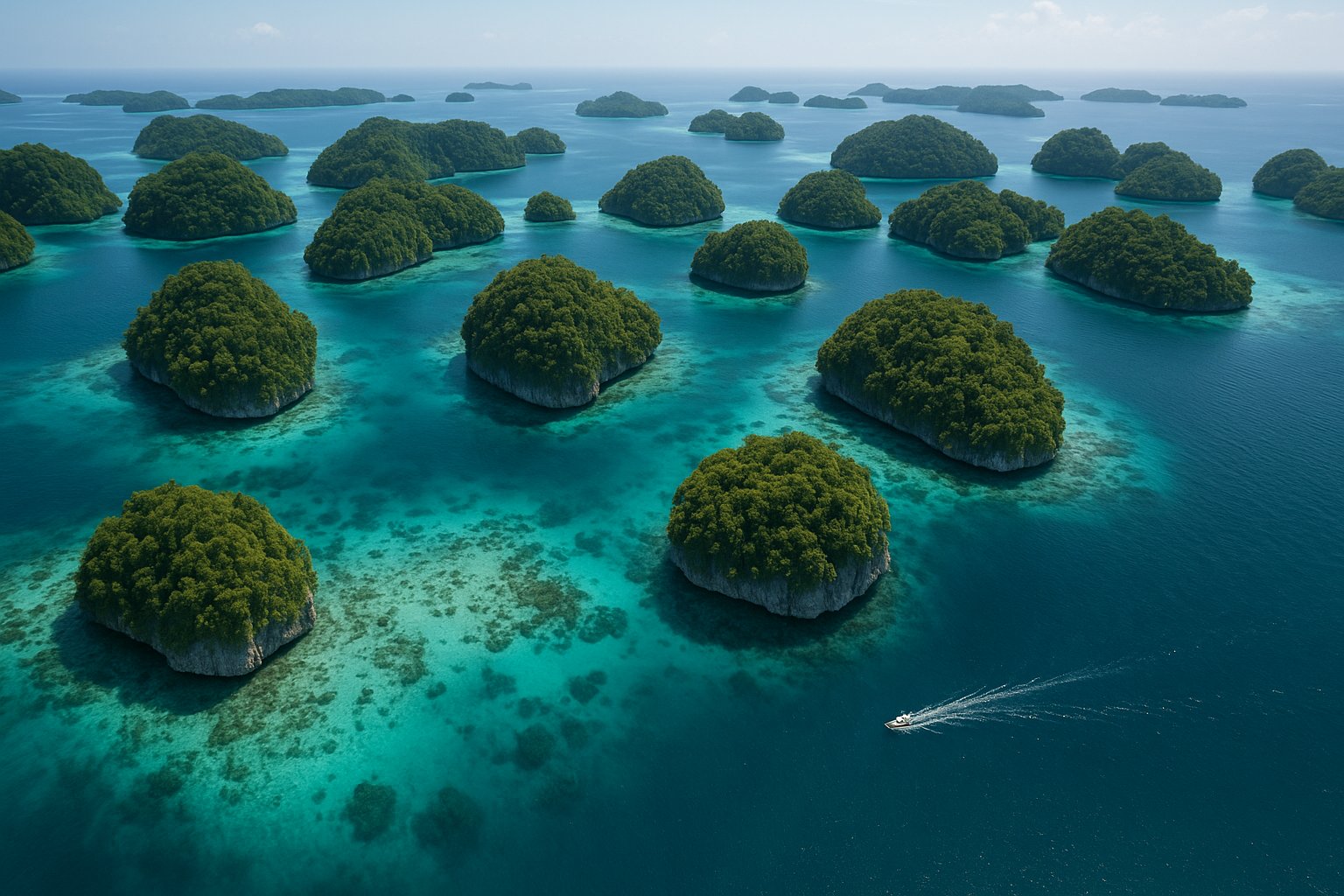
The Rock Islands are the reason. Hundreds of mushroom-shaped limestone islands sit in a lagoon so sheltered that much of the water inside it is calm enough to snorkel on a windy day, and the karst walls that make the scenery give the bays their structure. Inside those bays you get shallow coral, clear water and the unusual sense that you are swimming through a drowned landscape rather than over a reef.
Outside the islands, the barrier reef and the channels cut through it bring the current — and the current is what brings the big animals. This is a country where the same trip can include a still, shallow bay full of jellyfish and a channel where the tide is moving hard enough to decide whether you get in at all. That range is the appeal, and the reason a local operator matters more here than almost anywhere.
- Sheltered Rock Island bays with shallow coral, workable in wind
- Unique sites you will not find elsewhere: a marine lake and a milky mud swim
- Current-fed channels where the megafauna concentrates
- Real, enforced conservation rules — permits, rules and a national pledge
Best sites to prioritize
Start inside the Rock Islands. Nikko Bay, off Urukthapel, is the sheltered-bay archetype: shallow coral, calm water and karst walls, manageable when the outer reef is too rough. Clam City, off Mecherchar, is the easy companion piece — a shallow patch reef in clear, calm water populated by giant clams, some of them very large and very old, alongside coral heads and reef fish.
Jellyfish Lake, on the same island, is Palau's signature oddity: a marine lake cut off from the sea, reached by a short, steep trail, where golden jellyfish drift in water you can snorkel. Their sting is not felt by people. It is also fragile — the population has been hit by drought and warm-water events before and the lake has been closed to visitors at times to recover — so treat it as a site whose status must be verified before you plan around it, not a guaranteed stop.
The Milky Way is the other Rock Islands novelty: a shallow, enclosed patch where fine white calcium-rich mud clouds the water. There is very little reef there and the bottom is soft mud, so it is a swim-and-mud stop between coral sites rather than a snorkel in its own right.
For the current, German Channel is the one to think about carefully. A channel cut through the barrier reef, it is known for manta rays at cleaning stations along its edges, plus grey reef and whitetip sharks. The cleaning stations sit at diving depth, so this is mostly a diver's site: a snorkel here is a boat-and-tide call, judged by the operator, rather than a guaranteed encounter. And be clear about the rest of Palau's fame — the celebrated walls such as Blue Corner are dive sites, not snorkel sites, and no one should be sold a wall snorkel as though it were the same thing.
When to go & conditions
Palau sits just north of the equator, so the water is warm all year and temperature is rarely the deciding factor. The drier, calmer stretch is broadly December to April, when the trade winds settle and boat days are most reliable; the wetter months, broadly July to October, bring more rain and more unsettled weather, and the country sits near the edge of the western Pacific typhoon belt, so storm systems can disrupt travel in the wetter season.
Tides decide the good sites rather than the month. The channels and German Channel work on a specific flow, and a day with the wrong tide is a day with no snorkel at that site; the Rock Islands' sheltered bays, by contrast, are workable in most conditions. That is why a Palau itinerary is best built around the tide table with a local operator rather than a fixed list of stops.
Verify access as well as conditions. Rock Islands permits, the status of the jellyfish lake, and any current closures of particular bays are all managed locally and change over time, so confirm what is open and permitted for your dates before you commit. Check the local marine forecast too — this is open-ocean water outside the lagoon, and the passage out to the barrier reef can be rough.
Practical tips
Do the permits and the pledge before the boat. Palau requires visitors to sign a conservation pledge on entry, and boat access to the Rock Islands is permitted rather than open — your operator will typically arrange what is needed. Confirm exactly what is included in a trip (permit, lunch, entrance to managed sites) before you book rather than assuming, and expect the rules at managed sites to be explained and enforced on the day.
Take the sunscreen question seriously. Palau restricts reef-toxic sunscreens, so bring sun protection that complies with what is currently permitted rather than assuming your usual bottle is allowed; a rashguard and long sleeves cut the problem at source. At the jellyfish lake, rules on sunscreen and on handling the animals are specific — no scuba gear, no lifting jellyfish out of the water — and they exist because the lake is genuinely fragile.
On the water, treat every animal as wild. Never touch or stand on coral or clams, keep a respectful distance from sharks, rays and turtles, and stay off the soft mud at the Milky Way so the people behind you get the same water you did. Boats use moorings at managed sites, so let the guide place the boat rather than asking to be dropped directly on the reef.
Planning this trip?
Get the whole journey built end-to-end — flights, stays, boat days, gear and day-by-day timing notes — by the Double Fathom Concierge for a one-time $29. Re-plan any time, chat support through the trip, a destination-specific packing list, curated off-menu operators, and a printable offline PDF itinerary.
Secure checkout by Stripe — pay by card, receipt by email. A one-time, per-trip purchase — nothing recurring, and no rush either way.
Get the occasional best-reef dispatch
Trip-planning tips, seasonal reef picks and new-destination notes. No spam, unsubscribe anytime.
Explore the destination
Palau packs an unusual range into a small island group: drowned limestone Rock Islands with shallow, sheltered bays inside them, a marine lake you can snorkel among golden jellyfish, and channels where the tide carries sharks and mantas past. Almost all of it is reached by boat, and Palau manages its water seriously — permits, a conservation pledge and local rules are part of the trip, not an afterthought.
Palau destination guide →