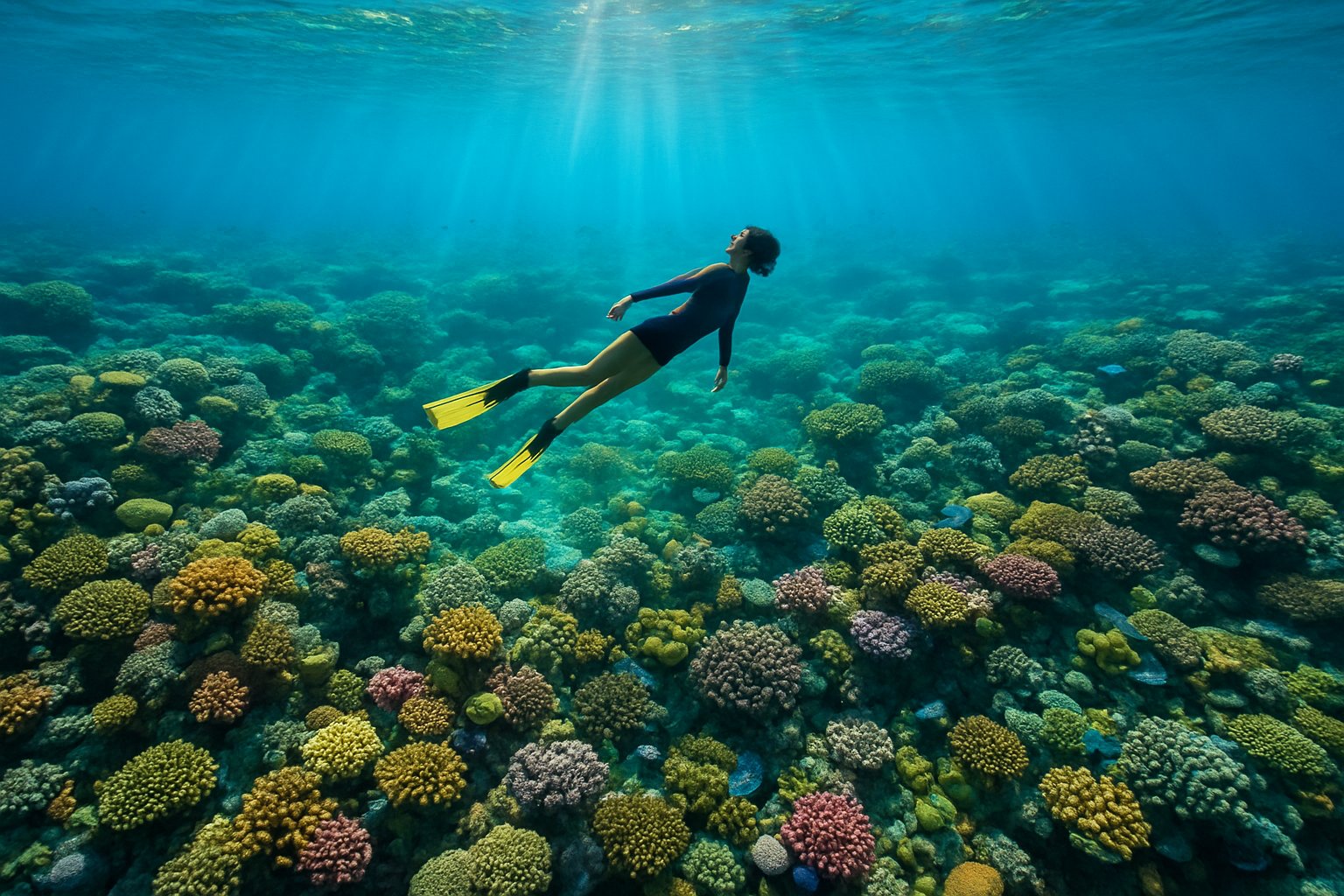
Best Snorkeling on the Great Barrier Reef
6 min read · Field guide
The Great Barrier Reef is the planet's largest living structure — over 2,300 kilometres of reef stretching along Australia's northeast coast — and the grand introduction to snorkeling for millions of people. From Cairns and Port Douglas, day boats and liveaboards reach the outer ribbon reefs and sand cays where the coral is at its most colourful and the water at its clearest. The reef has had a hard few decades, but the sections that still thrive are genuinely spectacular, and understanding where to go makes all the difference between a good day and a great one.
Seasonal guidance, not a forecast — no live tide tables, weather or marine advisories here; check local conditions before you go.
Why the Great Barrier Reef is great for snorkeling
Nothing else on Earth matches its scale, and the sheer number of accessible options means there's a style for everyone — a relaxed cay lagoon for first-timers, or an exposed outer ribbon reef for those who want dense, vibrant coral. The reef as a whole has suffered from bleaching events, but the resilient outer reefs off Port Douglas and Cairns still hold thriving gardens, and Australian operators run to strict standards.
For a snorkeler, that means reliable boats, good briefings, and a straightforward way to see magnificent reef life without advanced skills or remote logistics.
Best sites to prioritize
Agincourt Reef, an outer ribbon reef off Port Douglas, is a consistent standout — healthy coral gardens in clear offshore water. Michaelmas Cay, a sand cay and national park off Cairns, is a major seabird nesting site surrounded by shallow lagoons and coral, excellent for calm-water snorkeling.
Hastings Reef and Green Island round out the classic Cairns options: Hastings is a dependable day-boat reef with strong hard-coral and fish life, while Green Island offers sheltered, beginner-friendly snorkeling close to the mainland. For the ambitious, the SS Yongala wreck further south is a current-swept historical wreck — rewarding but genuinely advanced, not a first-timer site.
When to go & conditions
Australia's winter, roughly June to September, brings calm, clear conditions and the lowest rainfall — the most relaxed and predictable snorkeling window. Summer, roughly December to February, is warmer and more humid with lighter winds but a higher chance of rain, plus the stinger season along inshore areas from around November to May.
On the outer reef the box-jelly risk is lower, and most operators issue stinger suits in season as standard. Expect water temperatures roughly 23–30°C depending on season and latitude.
Practical tips
Match your base to your goal. Port Douglas is the closest launch point to the Ribbon Reefs; Cairns is the classic, well-served hub with day boats to Hastings, Michaelmas and Green Island. Out here you rarely snorkel from the beach — the outer sites are reached by boat, and offshore conditions can turn choppy, so pick a vessel with a good reputation for passenger comfort.
Book a full-day boat that includes two snorkel sites to hedge against a single spot being off. After the day on the water, the wharf fish-and-chip sheds behind Cairns' Marlin Marina are where the charter-boat crews actually eat — a good, honest meal that beats the tourist promenade.
Planning this trip?
Get the whole journey built end-to-end — flights, stays, boat days, gear and day-by-day timing notes — by the Double Fathom Concierge for a one-time $29. Re-plan any time, chat support through the trip, a destination-specific packing list, curated off-menu operators, and a printable offline PDF itinerary.
Secure checkout by Stripe — pay by card, receipt by email. A one-time, per-trip purchase — nothing recurring, and no rush either way.
Get the occasional best-reef dispatch
Trip-planning tips, seasonal reef picks and new-destination notes. No spam, unsubscribe anytime.
Explore the destination
The scale of the world's largest reef system, run through well-managed day-trip operators. Great for first-timers who want a safe, professional snorkel experience over a truly enormous reef.
Great Barrier Reef destination guide →