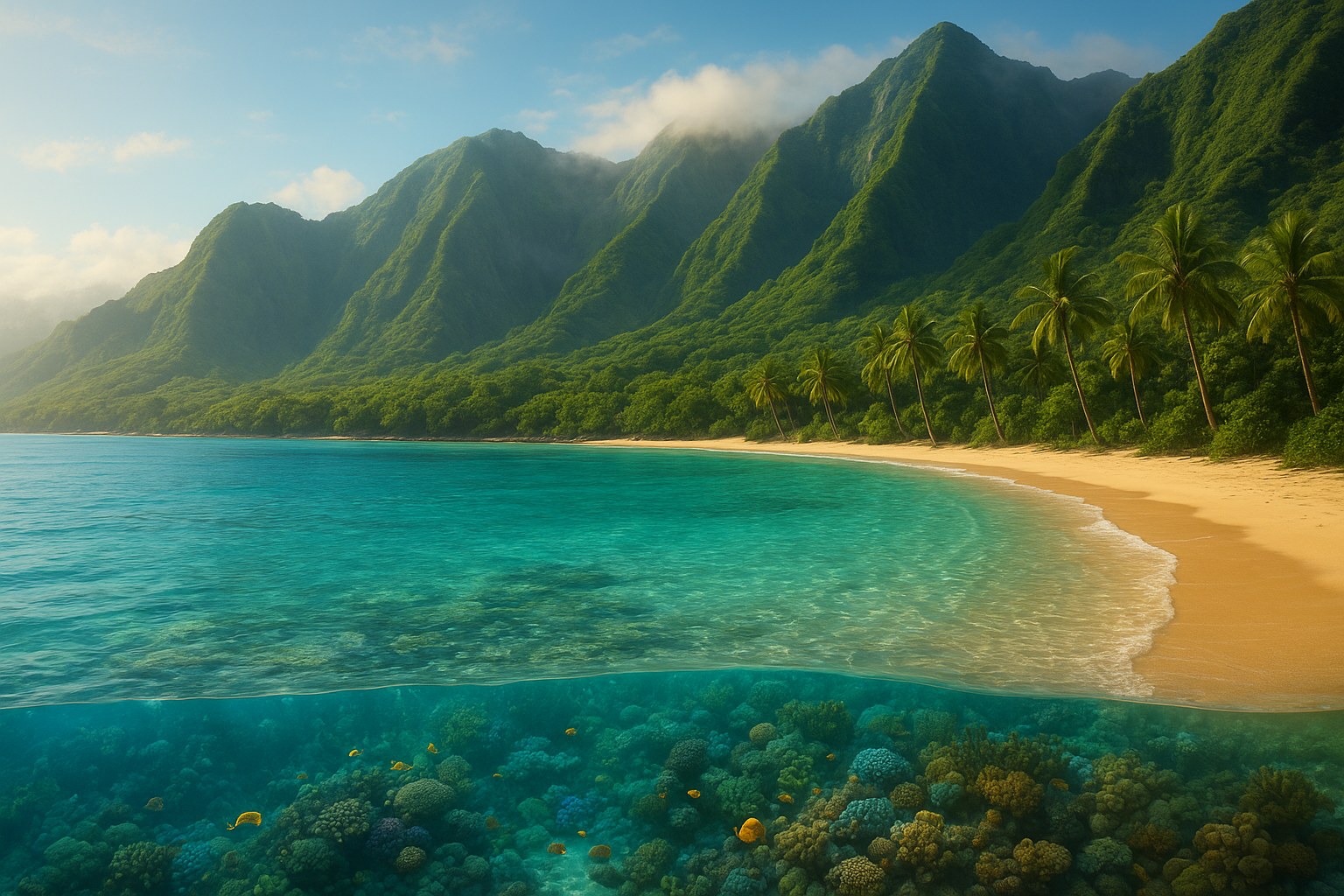
When to Snorkel Hawaii (Best Season Guide)
5 min read · Field guide
Hawaii is a year-round snorkel destination: water temperature barely shifts, typically sitting between roughly 24 and 27°C, and green sea turtles graze the shallows in every month. What changes with the seasons is not the temperature but the surf — winter swells hammer the north-facing shores while the south and west stay inviting, and summer calms the whole archipelago down. This guide breaks down what each window actually means for a snorkeler.
Seasonal guidance, not a forecast — no live tide tables, weather or marine advisories here; check local conditions before you go.
The short answer: summer is calmest, winter needs picking
If you can choose freely, aim for the summer months, roughly May through September. Trade-wind weather settles into its steadiest rhythm, swells are at their smallest on most shores, and visibility is typically at its clearest across the headline sites — Molokini's crater water off Maui, Hanauma Bay on Oahu, the South Kohala coves on the Big Island.
Winter, roughly November through February, is a different trip rather than a worse one. Big North Pacific swells roll into north-facing shores — Oahu's North Shore, Honolua Bay on Maui's northwest tip — and can shut those entries down for days. But the south and west shores (Waikiki and Hanauma Bay on Oahu, South Kohala and Kealakekua Bay on the Big Island, Poipu on Kauai) face away from the swell and stay very snorkelable. Winter simply rewards picking your shore by the forecast instead of defaulting to one beach.
Shore-by-shore thinking
Hawaii rewards the snorkeler who reads the surf forecast the way a skier reads snow. Mornings are usually calmest whatever the season, and trade winds tend to build through the afternoon — so an early start on the sheltered side of whichever island you are on is the most reliable formula in any month.
Island by island, the pattern holds: sheltered leeward shores first, windward and north-facing shores only when the swell map says yes. Molokini off Maui is a summer standout; in winter it still runs on calm days but crossings get cancelled more often.
- Water roughly 24–27°C year-round — a rash guard or thin top usually suffices
- Winter (Nov–Feb): favour south and west shores when north swells run
- Turtles graze the shallows in every month — no season needed
Planning around the season
Winter is peak visitor season, so boat days to Molokini and Kealakekua Bay book out early — reserve ahead if you travel over the holidays. Summer brings calmer water and slightly thinner crowds outside the school-holiday weeks, which makes it the easiest window for building a trip around multiple snorkel days.
Either way, start with our field guide to the best snorkeling in Hawaii, check the surf forecast each morning, and let the calm shore — not the calendar — pick your beach.
Planning this trip?
Get the whole journey built end-to-end — flights, stays, boat days, gear and day-by-day timing notes — by the Double Fathom Concierge for a one-time $29. Re-plan any time, chat support through the trip, a destination-specific packing list, curated off-menu operators, and a printable offline PDF itinerary.
Secure checkout by Stripe — pay by card, receipt by email. A one-time, per-trip purchase — nothing recurring, and no rush either way.
Get the occasional best-reef dispatch
Trip-planning tips, seasonal reef picks and new-destination notes. No spam, unsubscribe anytime.
Explore the destination
The Hawaiian chain's clear-water volcanic reefs and easy shore snorkeling, run on a comfortable island rhythm: green sea turtles on calm shore reefs, spinner dolphins in protected bays, and the bucket-list manta night snorkel off the Big Island.
Hawaii destination guide →