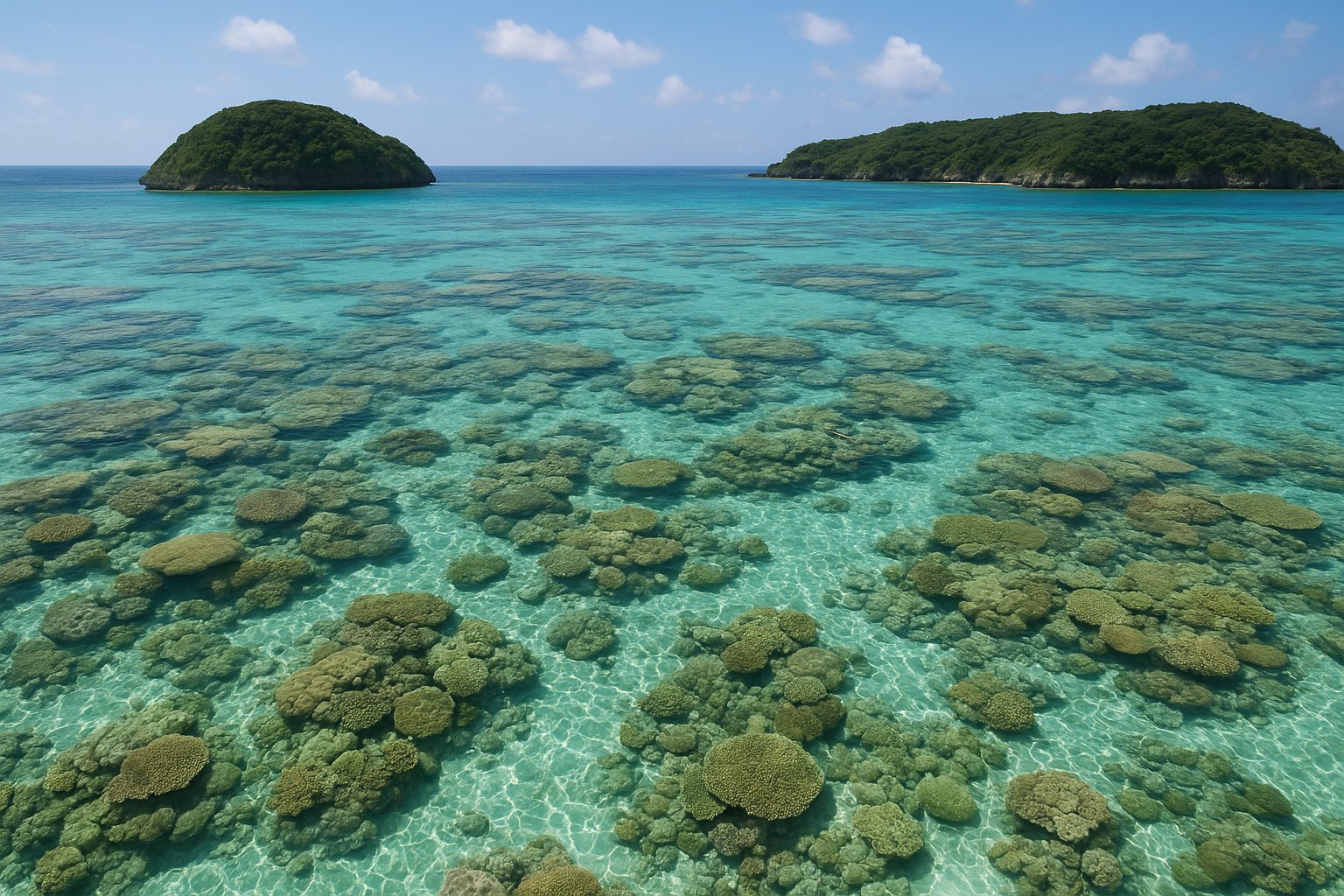
Best Snorkeling in Okinawa
6 min read · Field guide
Okinawa is the snorkeling surprise in Japan's travel map. This is a subtropical island prefecture strung across hundreds of kilometres of the western Pacific, and it holds three separate reef groups worth planning a trip around: the Kerama Islands with their famous clarity and resident turtles, the main island's west coast where a walk-in reef leads to a glowing sea cave, and the Yaeyama islands far to the south-west, behind one of the largest coral lagoons in the country. It is not Indonesia and it is not the Great Barrier Reef — this is a temperate-edge reef with its own character and its own seasons — but the water is genuinely clear, the operators are professional, and much of the best snorkeling is a boat hop or a short swim from a beach.
Seasonal guidance, not a forecast — no live tide tables, weather or marine advisories here; check local conditions before you go.
Why Okinawa is great for snorkeling
The first thing to understand is that 'Okinawa' covers a lot of ocean. The prefecture runs from the main island — a long, developed island with an international airport, resorts and ferry ports — down through the Miyako and Yaeyama groups towards Taiwan, and each group snorkels slightly differently. What they share is clarity: the Kuroshio current sweeps warm, nutrient-poor water past these islands, which is why the far offshore groups in particular are known for how far you can see.
The second thing is the wildlife. Sea turtles are genuinely part of the everyday snorkeling here rather than a special event, grazing seagrass and reef shallows around the Kerama Islands and the Gili-grade spots off every island group. Add coral gardens, reef fish and the occasional ray, and you have a destination where an average morning in the water is very good indeed.
And the third is ease. A great deal of Okinawan snorkeling is shore entry or a short boat ride, which means you can build a day around the water without committing to a week on a liveaboard. That is unusual for reef this good, and it is what makes the prefecture worth considering for a first reef trip in Asia.
- Three separate island groups, each with its own level of remoteness and access
- Sea turtles as a routine sighting rather than a lucky one
- Shore entry and short boat days instead of expedition logistics
- Warm in summer, cool enough in winter that a wetsuit is normal
Best sites to prioritize
Start with the Kerama Islands, roughly 40 kilometres west of Naha and the reason 'Kerama blue' exists as a phrase. Zamami, Tokashiki and Aka are fringed with coral in exceptionally transparent water, the group is a national park, and the turtles are the draw — a ferry or high-speed boat gets you there from the capital's port, though crossings are weather-dependent.
On the main island, Cape Maeda is the famous one: a rocky shore entry on the west coast at Onna that leads out to the Blue Cave, whose interior glows blue in the morning light. It is genuinely walk-in snorkeling, and genuinely busy — this is Japan's best-known snorkel site, the entry gets difficult in swell, and access at the cave is periodically restricted. Go early and check the day's conditions.
If you have the time for a second flight, the Yaeyama islands are the deeper experience: the Sekisei Lagoon between Ishigaki and Iriomote is one of Japan's largest coral lagoons, and Ishigaki's Shiraho coast carries a rare blue-coral community. Do not, however, plan to swim at Kabira Bay on Ishigaki, beautiful as it is — swimming is not permitted in the bay itself; it is a glass-bottom-boat view, and the snorkeling is elsewhere on the island.
When to go & conditions
Okinawa runs a long, hot, humid summer and a mild winter, and the water follows: warm enough through the summer months to snorkel in a rashguard for a long time, and cool enough in winter that a wetsuit makes a real difference to how long you stay in. Unlike the tropics this is a place where exposure protection is a seasonal decision rather than a formality.
The bigger planning variables are not temperature. Okinawa sits in the western Pacific typhoon belt, with the highest risk running through the late summer and autumn, and the islands also see heavy rain events that can take the edge off visibility near the coast. Winter brings stronger winds and bigger swell on exposed coasts, which is exactly when the sheltered leeward sides and the lagoon sites earn their keep.
So build around the sea state, not just the calendar: pick the sheltered side of the island on the day, treat ferry and boat schedules as weather-dependent, and verify the day's marine forecast and local conditions before you commit to a crossing. Mornings are usually the calmest and clearest window, and they are also when the Blue Cave glows best.
Practical tips
Bring your own mask, snorkel and fins if you can — rental exists, but a good fit is worth carrying. Reef booties matter here more than in most places, because several of the best shore entries are over rock and broken coral.
Book through a licensed local operator for anything beyond a lagoon swim. Japanese snorkel operators are generally well-run and safety-conscious, and they know the tide windows, the closures at the cave and which side of an island is calm. That local knowledge is doing real work on a coast exposed to open Pacific swell.
Respect the rules, which here are real and enforced. Kerama is a national park with visitor restrictions, some sites close periodically for safety or conservation, and Kabira Bay is a no-swim bay. Never touch or stand on coral, give turtles room to surface, and take nothing from the water or the shore.
Finally, plan the logistics as a Japanese trip rather than a barefoot island one: ferry schedules and closures, a very busy domestic flight network from Naha to the outer island groups, and a language barrier that is manageable but real outside the main tourist areas. A travel admin check on entry, health facilities and emergency numbers is worth doing before you fly — the Concierge panel on the destination page carries the verified detail.
Planning this trip?
Get the whole journey built end-to-end — flights, stays, boat days, gear and day-by-day timing notes — by the Double Fathom Concierge for a one-time $29. Re-plan any time, chat support through the trip, a destination-specific packing list, curated off-menu operators, and a printable offline PDF itinerary.
Secure checkout by Stripe — pay by card, receipt by email. A one-time, per-trip purchase — nothing recurring, and no rush either way.
Get the occasional best-reef dispatch
Trip-planning tips, seasonal reef picks and new-destination notes. No spam, unsubscribe anytime.
Explore the destination
Japan's southern island prefecture, with real, well-served snorkeling in three separate groups: the Kerama Islands off the main island, where the water is famously clear and sea turtles are the draw; the main island's west coast at Cape Maeda, home to the shore-entry Blue Cave; and the Yaeyama islands far to the south-west, where Ishigaki and Iriomote sit behind one of the largest coral lagoons in Japan. This is not the Coral Triangle and it is not Indonesia: it is a subtropical Pacific reef that runs warm enough for a rashguard in summer and cool enough that a wetsuit is usual in winter. What it offers is excellent clarity, professional local operators, and snorkeling you can build a day around without an expedition.
Okinawa destination guide →