Best Snorkeling in the Saudi Red Sea
6 min read · Field guide
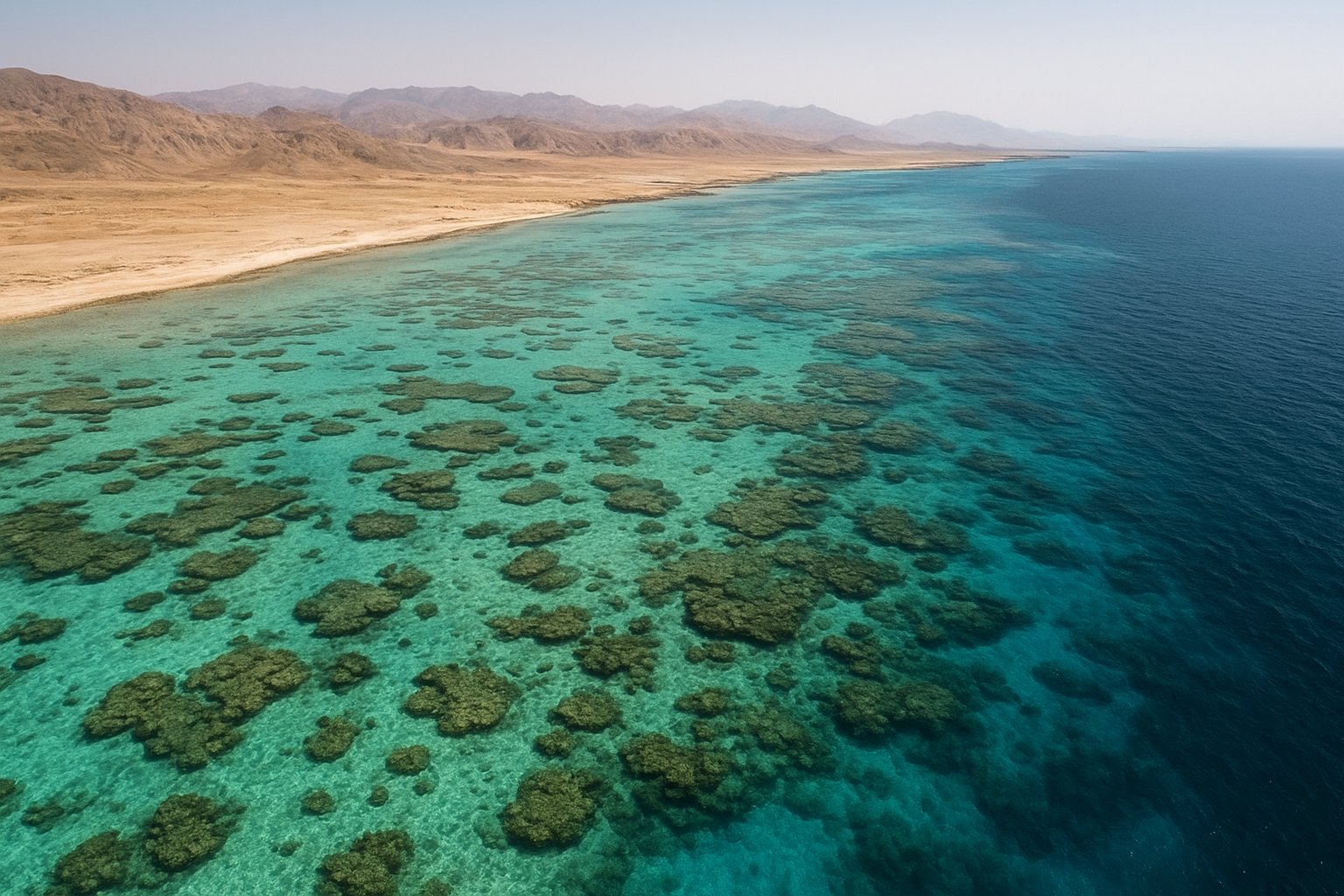
Saudi Arabia's Red Sea coast is the newest snorkeling region in this catalog and the least developed. Leisure tourism opened here in 2019, and the reef along the northern coast — Umluj, Al Wajh and the enormous Al Wajh Bank offshore, Yanbu, and NEOM's Sindalah island — has taken a small fraction of the diving pressure that Egypt's coast handles every season a few hundred kilometres north-west. That is genuinely exciting. It is also genuinely unfinished: licensed snorkel and dive operators are few, what exists changes quickly, and much of the best water is a boat day or a liveaboard away rather than a walk off a beach. This guide is written for a traveller who wants to know the difference.
Seasonal guidance, not a forecast — no live tide tables, weather or marine advisories here; check local conditions before you go.
Why snorkel the Saudi Red Sea
Because the reef has barely been visited. The northern Saudi coast shares the same warm, enclosed Red Sea water as Egypt's, with the same almost total absence of river runoff and the same potential for exceptional visibility — but it does not carry the same boat traffic. Umluj's island group, the Al Wajh Bank offshore and the reefs around Yanbu see a fraction of the divers and day boats of the Egyptian coast, and coral that is not regularly swum over is coral that is usually in better shape.
The second reason is timing. Saudi Arabia opened to leisure tourism only in 2019, and in a few years it has moved from effectively closed to genuinely visitable, with a tourist e-visa, direct flights and a fast-growing resort sector. That makes this a window rather than a permanent condition: the reason to go now is precisely the thing that will change. Travellers who want to see lightly touched reef with modern infrastructure around the edges — rather than a full dive-town tourism machine — are the ones this coast currently suits.
- Umluj's undeveloped islands and fringing coral, with very little traffic
- Al Wajh Bank — a vast offshore reef province still barely dived
- Yanbu's shore-adjacent reef and long-established local diving scene
- Sindalah (NEOM), the turnkey resort route to the same water
- E-visa entry and a tourism sector that is opening rather than mature
Best sites to prioritize
Start with Umluj. A scatter of low, undeveloped islands and sandbars with fringing coral and pale shallows, it is the stretch that earned its local 'Maldives of Saudi Arabia' nickname, and the snorkeling is the island fringes and the shallow reef between them. Treat the nickname as marketing rather than a condition report, though: infrastructure here is thin and changing fast, licensed boat operators are limited, and the honest expectation is that you arrange access around Umluj rather than find it waiting at a jetty.
Al Wajh Bank is the region's big reef province — banks, small atolls and lagoons across an enormous area offshore from Al Wajh — and the reason liveaboard and expedition diving is growing on this coast. Be precise about what is in snorkel range: much of the bank sits at diving depth, and the realistic snorkeling is the shallow lagoon and island fringes on a licensed boat day or liveaboard. Surface access, permits and operator availability are all still developing, so confirm locally and do not assume a scheduled day trip exists.
Yanbu is the third stop and a different proposition: a historic port town with reef running close inshore and a long-established local diving scene. It is also a working industrial port, which means parts of the shoreline and water are off-limits to the public. Local guidance, not a brochure, decides where you can get in, so verify access and restrictions rather than assuming a public beach entry.
At the resort end, Sindalah — NEOM's first island destination — has been opening in phases in recent years with a marina, accommodation and surrounding reef among the least-visited water in the country. It is the most turnkey way to reach Saudi reef water and comfortably the most expensive, and snorkeling here generally means a resort marine programme or a hotel-arranged boat rather than an independent trip. Because the project is still being built, verify what currently exists before you plan around it. And for completeness, the Farasan Islands off Jazan in the far south-west are a protected archipelago of reef and mangroves with a nature reserve's rules — a separate journey from a different airport, not a stop on a northern-coast trip.
When to go & conditions
The Red Sea is warm year-round and has no monsoon that shuts it down, so there is no month in which the water stops being swimmable. What changes is the air and the wind. On the northern Saudi coast, evenings and winters can be genuinely cool and breezy on the surface even while the water stays comfortable, and midsummer days are hot on land in a way that shapes when you want to be on a boat rather than in the water.
Broadly, the calmer, most comfortable boating weather falls in the spring and autumn months, with a persistent northerly wind that can build in other seasons and chop up exposed water. As anywhere on the Red Sea, that wind decides the day: a sheltered island fringe can be perfectly swimmable while an exposed offshore bank is not.
There is a second, entirely practical dimension to season here, and it is not weather: what is open. This coast is being built while you read, so a resort, a marina or an operator that exists this year may be closed, expanded or relocated next year. Verify the season's openings along with the sea state, and treat a chat with a local operator before booking as the single most valuable planning step for this destination.
Practical tips
Plan on arranging your own snorkeling rather than booking it off a shelf. On this coast that means identifying a licensed operator, a resort marine programme or a liveaboard directly, months ahead in the case of liveaboards, and confirming that the boat, the guide and any permit are genuinely in place for your dates. Gear rental is limited too, so bring your own well-fitted mask, snorkel and fins rather than assuming you can hire them locally.
Respect the rules of a country where they matter more than usual on the beach. Saudi Arabia is a conservative society with dress expectations in public places, alcohol is illegal, and the country has strict laws and severe penalties for drugs; public behaviour and photography rules differ from what many visitors assume, and the UK government's travel advice for Saudi Arabia is the place to read the detail before you go rather than after. For reef etiquette the usual applies and then some: never touch or stand on coral, keep clear of turtles and other wildlife, and use reef-safe sunscreen.
Treat the water as the remote water it is. Much of the best snorkeling here is offshore, in places where the boat is your only way back and where the nearest hospital may be some distance away — the UK FCDO's own guidance says facilities in major Saudi cities are of a high standard while serious cases may be transferred by ambulance or air to a hospital in a major city that may be a long way off. Carry adequate insurance that covers boat-based water activities and evacuation, check in with your skipper about the plan and the communications, and let people know where you are going.
Finally, be honest in your expectations when you get there. This is a frontier coast: some days will deliver the least-visited coral you have ever swum over, and some days a plan will fall through because a boat is not running or a site is closed. Travellers who enjoy that trade — quiet reef in exchange for doing their own legwork — will find this the most interesting destination in the catalog. Travellers who want a resort dive shop with a board of daily trips should look at Egypt instead.
Planning this trip?
Get the whole journey built end-to-end — flights, stays, boat days, gear and day-by-day timing notes — by the Double Fathom Concierge for a one-time $29. Re-plan any time, chat support through the trip, a destination-specific packing list, curated off-menu operators, and a printable offline PDF itinerary.
Secure checkout by Stripe — pay by card, receipt by email. A one-time, per-trip purchase — nothing recurring, and no rush either way.
Get the occasional best-reef dispatch
Trip-planning tips, seasonal reef picks and new-destination notes. No spam, unsubscribe anytime.
Explore the destination
Saudi Arabia's Red Sea coast is the newest and least developed snorkeling region in this catalog, and both halves of that sentence are the point. The country opened to leisure tourism in 2019 with an e-visa, and the reef along the northern coast — Umluj, Al Wajh, the huge Al Wajh Bank offshore, Yanbu, and the NEOM project's Sindalah island — has seen a small fraction of the diving pressure that Egypt's coast, a few hundred kilometres north-west, handles every season. What that means in practice is genuine frontier reef alongside genuine frontier logistics: licensed snorkel and dive operators are few, what exists changes quickly, and a lot of the best water is a boat day or a liveaboard away rather than a walk off a beach.
Saudi Red Sea destination guide →